corporate sustainability strategy meeting in modern office

How Sustainable Practices Help Attract and Retain Business Customers

Tod Hardin
corporate sustainability strategy meeting in modern office
Navigation

"Our clients' clients are holding them accountable for sustainability, and that pressure travels up the supply chain fast."

— Ivan Arbouzov, Founder & CEO, Clear Drop

There was a time when a company's sustainability credentials were an afterthought in the sales process — something noted in an appendix, rarely discussed in the room. That time has passed.

Today, corporate clients are scrutinizing the environmental practices of their vendors, suppliers, and service partners with a level of rigor that would have seemed unusual a decade ago. Procurement teams ask about waste diversion programs. RFPs include ESG questionnaires. Long-term contracts hinge, in part, on whether a partner's values align with their own.

For B2B organizations, sustainability is no longer just a moral position. It's a market position. According to McKinsey, companies with strong ESG ratings typically outperform the market in both the medium and long term.

Fortune 500

enterprises now cascade net-zero and zero-waste-to-landfill commitments directly down their vendor supply chains

94%

of film plastics can be diverted from landfill with a documented soft plastic diversion program like the SPC

ESG

criteria are now appearing in RFPs, vendor qualification processes, and supplier codes of conduct across major industries

sustainability-linked purchasing decisions affect both new client acquisition and long-term retention — not just one

The B2B Procurement Shift Is Already Here

The most significant driver of sustainability-linked purchasing in the B2B space isn't regulation — it's the cascade effect of corporate ESG commitments.

When a Fortune 500 company pledges to reach net-zero emissions or achieve zero-waste-to-landfill status by a target year, that commitment doesn't stop at their own front door. It flows down the supply chain. Their vendors are expected to contribute to — or at minimum, not undermine — those goals.

This cascade is accelerating. As more major enterprises formalize their sustainability targets, the ripple effect reaches deeper into their vendor ecosystems, touching companies of every size and sector. Mid-market B2B organizations that once viewed ESG as something only large corporations needed to worry about are now finding it front and center in commercial recycling and waste management procurement conversations.

The key shift

The question is no longer whether your clients care about your sustainability practices. It's whether your practices are strong enough to hold up when they take a look.

Purchasing Decisions Are Increasingly Values-Driven

Sustainability has entered the purchasing calculus in two distinct but reinforcing ways: as a formal requirement and as an informal preference.

As a formal requirement, ESG criteria are appearing with growing frequency in RFPs, vendor qualification processes, and supplier codes of conduct. Large enterprises — particularly in consumer goods, financial services, healthcare, and technology — are building sustainability and zero waste standards directly into procurement frameworks. Failing to meet them can disqualify a vendor before a conversation even begins.

As an informal preference, the people making or influencing purchasing decisions bring their own values to the table. Procurement managers, sustainability officers, and executive sponsors increasingly favor partners who reflect their organization's environmental commitments — even when sustainability isn't formally scored. In close vendor evaluations, a demonstrable ZeroTrash program, documented waste diversion rates, or a soft plastic recycling initiative can be the differentiating factor that tips the decision.

What unites both dynamics is that sustainability is no longer a soft consideration. It's showing up in the same conversations as pricing, service levels, and delivery capability — because for many clients, it belongs there.

business team reviewing ESG and sustainability performance data on screen

Sustainability Drives Client Retention, Not Just Acquisition

The business case for sustainability in customer relationships extends well beyond the initial sale. The same values alignment that attracts a client in the first place becomes a retention mechanism over time.

When a client chooses a vendor who shares their environmental commitments, they're not just making a purchasing decision — they're building a partnership with cultural coherence. Those partnerships have more depth, more resilience, and more longevity than purely transactional relationships. They're harder to disrupt on price alone, because the relationship has meaning beyond the contract.

This plays out most visibly in contract renewals and long-term agreements. Clients who see their vendors actively advancing — not just maintaining — their environmental sustainability initiatives are more likely to view that relationship as a strategic one worth investing in. Conversely, clients who feel a vendor's sustainability commitments have stalled or turned out to be superficial have a reason to look elsewhere, particularly as their own ESG expectations mature.

The implication for B2B businesses

Sustainability isn't a one-time credential to earn. It's a practice to continuously demonstrate. Companies that treat it as a living, improving commitment — with transparent tracking, regular reporting, and genuine operational investment — build customer loyalty that outlasts any single contract cycle.

Tangible Programs Outperform Vague Commitments

In an environment where greenwashing scrutiny is high, the companies that win on sustainability do so not by making broader promises, but by pointing to specific, verifiable programs.

A documented ZeroTrash initiative — one with measurable diversion rates, named recycling pathways, and operational infrastructure — carries far more weight in a client conversation than a mission statement about environmental responsibility. It gives procurement teams something concrete to evaluate. It gives sustainability officers something credible to cite in their own reporting. And it gives executives the confidence that this vendor's commitment is real, not rhetorical.

modern commercial recycling facility with automated waste sorting system

Real-World Impact: What Measurable Programs Look Like

Program Type Measurable Outcome
Soft plastic diversion (SPC) Up to 94% of film plastics diverted from landfill
Organics collection (OC) Structured food waste separation with tracked diversion rates
ZeroTrash initiative Documented hauling frequency reduction + cost savings
Commercial recycling program Verifiable recycling data for ESG reporting

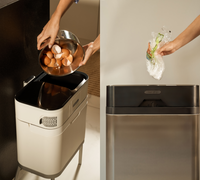
This is where programs like soft plastic diversion and organics collection earn their place in commercial recycling — not just in a company's waste management strategy, but in its business development strategy. The Clear Drop Soft Plastic Compactor (SPC), for instance, creates an end-to-end, verifiable recycling pathway for film and other soft plastics — a waste stream that most organizations quietly send to landfill because no practical alternative exists. Having a documented solution for that gap says something meaningful about how seriously a company takes its sustainability commitments.

Similarly, the Clear Drop Organics Collector (OC) brings the same operational credibility to food and organic waste diversion — another area where stated intentions frequently outpace actual infrastructure. Clients notice the difference. And increasingly, so do their procurement systems.

The Reputational Signal Reaches Beyond Your Direct Clients

The impact of strong sustainability practices doesn't stop with existing or prospective clients. It radiates outward.

Companies known for genuine environmental stewardship benefit from a reputational halo that attracts inbound interest, generates referrals, and opens doors in new markets. In industries where supplier networks are tight and word-of-mouth travels fast, being recognized as a sustainability leader can be more valuable than any marketing campaign.

There's also a growing media and industry analyst dimension to this. Trade publications, sustainability indices, and industry award programs are increasingly recognizing companies for environmental performance. Being featured in that coverage — or qualifying for those certifications — puts a company in front of prospective clients who are actively seeking partners aligned with their values.

For businesses pursuing growth in sustainability-conscious sectors, this external recognition can be as commercially valuable as a direct referral.

corporate workspace with sustainability planning and business operations setup

What Strong Sustainability Credentials Look Like to a Client

For B2B organizations looking to strengthen their position with current and prospective clients, the following are the areas that matter most:

What Clients Look For Why It Matters
Documented waste diversion programs with real data Gives procurement teams measurable metrics, not aspirational targets
Named recycling pathways for difficult waste streams (soft plastics, organics) Signals operational seriousness; most vendors lack credible solutions here
Transparency and reporting infrastructure Clients with ESG obligations need partners who can supply data, not just anecdotes
Continuous improvement trajectory 'We achieved X, and here's what's next' is more compelling than static credentials
Commercial waste management services on contract Enables long-term planning and budget predictability for facility managers

"The business community has a critical role to play in addressing plastic pollution. Companies that build real circular economy practices into how they work aren't just reducing harm. They're building the kind of credibility and trust that clients, partners, and communities increasingly expect before they'll commit to a long-term relationship."

— Mark Minneboo, ESG & Circular Economy Strategist, former Director of Advocacy, Plastic Oceans International

Sustainability has graduated from corporate responsibility to competitive strategy. In B2B markets, the companies that attract and retain the best clients will increasingly be those that can demonstrate — not just describe — their environmental commitments.

ZeroTrash, or zero waste initiatives, soft plastic diversion programs, and organics collection solutions are no longer niche sustainability projects. They are business development assets. They reduce costs, satisfy commercial recycling procurement requirements, deepen client relationships, and generate the kind of reputational signal that brings new opportunities to the door.

The companies that understand this aren't just doing good. They're building businesses that are better positioned to grow.

Want to see how sustainability programs strengthen your team from the inside too? Read our companion post on how ZeroTrash initiatives strengthen workplace culture and attract eco-conscious talent.

Ready to build sustainability credentials that hold up?

Explore how the Soft Plastic Compactor and Organics Collector give your program the operational credibility clients expect.

Explore Clear Drop Solutions →


Latest posts All posts

Can You Compost Cooked Food? What Goes In (And What Doesn't)

Can You Compost Cooked Food? What Goes In (And What Doesn't)

  You're already full but looking down at a half-eaten plate. You pause. The compost bin is ri...
6 Steps to Launching a ZeroTrash Program at Your Organization

6 Steps to Launching a ZeroTrash Program at Your Organization

Sustainability intentions are easy. Operational sustainability is harder — and far more val...
The Real Difference Between Composting and Organic Waste Collection

The Real Difference Between Composting and Organic Waste Collection

Most people trying to manage food waste hit the same wall. Backyard composting requires outdoor...
Organic Waste Laws by State: What's Already Required and What's Coming

Organic Waste Laws by State: What's Already Required and What's Coming

Most conversations about composting start with legitimate questions: Why does it matter? What d...
How To Talk to Your Roommates (or Partner) About Waste Sorting

How To Talk to Your Roommates (or Partner) About Waste Sorting

You've already done the hard work: figured out how to sort your food scraps, learned that soft ...
Food Scraps in the Landfill: What's Actually Happening Underground

Food Scraps in the Landfill: What's Actually Happening Underground

Most food scraps end up in landfills, where they produce methane — a greenhouse gas far more po...
Atlantic Health Demonstrates Diversion of One Ton of Plastic Waste Annually with SPC

Atlantic Health Demonstrates Diversion of One Ton of Plastic Waste Annually with SPC

Single-use plastic waste is one of the most persistent challenges facing healthcare facilities ...
Earth Day 2026: 5 Waste Habits That Make a Real Difference at Home

Earth Day 2026: 5 Waste Habits That Make a Real Difference at Home

🌍 Earth Day 2026 5 Small Habits That Actually Reduce Household Wast...
The Organics Collector as a Community Tool: Why Early Adopters Are Leading the Change

The Organics Collector as a Community Tool: Why Early Adopters Are Leading the Change

Most people assume that waste habits are shaped by systems — city programs, building rules, mun...
How Sustainable Practices Help Attract and Retain Business Customers

How Sustainable Practices Help Attract and Retain Business Customers

"Our clients' clients are holding them accountable for sustainability, and that pressure trave...
Why Your Kitchen Compost Bin Still Smells and What Actually Fixes It

Why Your Kitchen Compost Bin Still Smells and What Actually Fixes It

"I tried bins with filters before. They still had fruit flies and odor — I was already thinkin...
What is an Organics Collector? (And Why It’s Not a Composter)

What is an Organics Collector? (And Why It’s Not a Composter)

What Is an Organics Collector? (And Why It's Not a Composter) A quick search for a "composter a...
Global Recycling Day: The Reality of  Recycling and How You Can Help Improve the Stats

Global Recycling Day: The Reality of Recycling and How You Can Help Improve the Stats

March 18 is Global Recycling Day, an international initiative created by the Global Recycling F...
Soft Plastic Recycling Myths That Stop People from Taking Action

Soft Plastic Recycling Myths That Stop People from Taking Action

Soft plastic recycling myths that stop people from taking action Soft plastic recycling can be ...
How ZeroTrash Initiatives Improve Workplace Culture and Attract Eco-Conscious Talent

How ZeroTrash Initiatives Improve Workplace Culture and Attract Eco-Conscious Talent

Plus, A 6-Step Approach to Implementing ZeroTrash Adoption Sustainability is no longer a side ini...
Mandatory Organic Waste Separation in New York: How To Comply Without Odors, Messes, or Fines

Mandatory Organic Waste Separation in New York: How To Comply Without Odors, Messes, or Fines

Over the past couple of years, New York City has steadily changed how residential waste is ...
UCSF Health's Mission Bay Hospital Achieves Guaranteed Recycling of Pharmacy Soft Plastic Waste with Clear Drop SPC

UCSF Health's Mission Bay Hospital Achieves Guaranteed Recycling of Pharmacy Soft Plastic Waste with Clear Drop SPC

Healthcare facilities generate massive amounts of plastic waste daily, and California's ambitiou...
How To Compost Eggshells and Vegetable Scraps the Right Way: Faster, Nutrient-Rich Composting & Zero-Waste Kitchen Tips

How To Compost Eggshells and Vegetable Scraps the Right Way: Faster, Nutrient-Rich Composting & Zero-Waste Kitchen Tips

In many homes, food scraps make up around 25% to 30% of household waste. When sent to landfills, ...
Soft Plastic Compactor vs. Curbside Recycling: The Real Difference

Soft Plastic Compactor vs. Curbside Recycling: The Real Difference

Most people assume recycling works when something goes into the blue bin. But for soft...
How Your Household Can Save Up to $240 a Year on Trash Costs

How Your Household Can Save Up to $240 a Year on Trash Costs

Household trash bills are rarely questioned. Most people accept them as a fixed cost, just like...
How ZeroTrash® AI Helps You Identify Soft Plastics Correctly

How ZeroTrash® AI Helps You Identify Soft Plastics Correctly

ZeroTrash® AI is designed to take the guesswork out of everyday waste decisions. Using a camer...
Why CES 2026 Shifted the Conversation Around Household Waste

Why CES 2026 Shifted the Conversation Around Household Waste

CES has always been a place for bold ideas and ambitious visions. But this year, we noticed a sub...
How to Compost in an Apartment (Without Annoying Your Neighbors or Your Landlord)

How to Compost in an Apartment (Without Annoying Your Neighbors or Your Landlord)

Many people still believe composting requires a yard. In reality, modern indoor composting work...
Post-Holiday Waste Reset: Starting 2026 With a Clean, ZeroTrash® Kitchen

Post-Holiday Waste Reset: Starting 2026 With a Clean, ZeroTrash® Kitchen

The holidays may bring plenty of celebration — but they can also leave a big mess, between a clut...
From Trash to Treasure: Real Products Made From Recycled Soft Plastics (and How Clear Drop Makes It Happen)

From Trash to Treasure: Real Products Made From Recycled Soft Plastics (and How Clear Drop Makes It Happen)

Fun fact: Soft plastics aren’t “unrecyclable.” They’ve just been collected the wrong way for over...
Holiday Composting Guide 2025: How to Reduce Waste at Christmas & New Year Events

Holiday Composting Guide 2025: How to Reduce Waste at Christmas & New Year Events

The holidays bring plenty of food, cheer, and …. waste? With all those extra food scraps, packagi...
How Much Food Americans Waste and What You Can Do

How Much Food Americans Waste and What You Can Do

Key Takeaways Americans waste 30%-40% of their total food supply each year ...
How the Shaw Institute Successfully Started to Recycle Laboratory Soft Plastic Waste for the First Time with SPC

How the Shaw Institute Successfully Started to Recycle Laboratory Soft Plastic Waste for the First Time with SPC

The Shaw Institute in Blue Hill, Maine, is a respected nonprofit research organization studying t...
10 Soft Plastics You Didn’t Know You Could Recycle at Home

10 Soft Plastics You Didn’t Know You Could Recycle at Home

Key Takeaways Only 1% of U.S. households have access to curbside film recyc...
How Clear Drop’s Soft Plastic Compactor (SPC) Recycling System Works | Clear Drop

How Clear Drop’s Soft Plastic Compactor (SPC) Recycling System Works | Clear Drop

At Clear Drop, we're redefining what responsible soft plastic recycling looks like. Our Sof...
How Geekdom sparked early wins in soft plastic recovery with the Clear Drop's SPC

How Geekdom sparked early wins in soft plastic recovery with the Clear Drop's SPC

Geekdom is a cornerstone of San Antonio’s startup and innovation ecosystem. Spread across four fl...
How Trinity University advanced soft plastic recycling with the SPC

How Trinity University advanced soft plastic recycling with the SPC

Flexible plastic waste is one of the most persistent challenges on college campuses. From snack w...
From soft plastic to microplastic: what to know

From soft plastic to microplastic: what to know

Soft plastic packaging surrounds almost every product we buy — bags, wrappers, film, shippi...
Survey reveals trash sparks more fights than childcare, and why recycling Is at the heart of It

Survey reveals trash sparks more fights than childcare, and why recycling Is at the heart of It

Trash duties are the most underestimated part of modern household life—yet they’re one of the big...
How one office building pilot became a model for smarter soft plastic waste reduction

How one office building pilot became a model for smarter soft plastic waste reduction

Commercial buildings generate a large share of soft plastic waste — from deliveries, shipments, ...
Official rules: Clear Drop OC pre-order giveaway

Official rules: Clear Drop OC pre-order giveaway

The drawing was heldWINNER SELECTION VIDEO1. SPONSOR The Clear Drop Pre-Order Giveaway (the “Give...
Fixing the broken recycling system: why Clear Drop® exists

Fixing the broken recycling system: why Clear Drop® exists

The global recycling system is struggling to keep up with the waste we generate. Most soft pla...
Getting started with soft plastic waste collection at home

Getting started with soft plastic waste collection at home

Flexible packaging makes everyday life easier, but most soft plastics still end up in landf...
How Eduardo's Bridal & Tuxedo reduced soft plastic waste volume by 90% with the SPC

How Eduardo's Bridal & Tuxedo reduced soft plastic waste volume by 90% with the SPC

Garment retail businesses rely heavily on flexible plastic packaging to protect inventory. But on...
Clear Drop: how we’re revolutionizing home waste management

Clear Drop: how we’re revolutionizing home waste management

Most household waste still ends up in landfills, not because people do not want to recycle, but b...
Why business recycling matters: a key to corporate sustainability

Why business recycling matters: a key to corporate sustainability

Corporate sustainability is now a critical business priority. Both employees and customers ...
Tackling plastic in the healthcare industry: challenges and solutions

Tackling plastic in the healthcare industry: challenges and solutions

U.S. healthcare produces more than 5 million tons of waste every year, and plastics account for...
Composting: electric vs. professional or traditional options

Composting: electric vs. professional or traditional options

In the United States, food scraps make up a significant share of household waste — yet only...
Soft plastic recycling: key challenges and solutions

Soft plastic recycling: key challenges and solutions

Soft plastics like grocery bags, bubble wrap, and packaging film make up a growing share of...
All posts

FAQs

Commercial recycling programs give B2B companies something concrete to show procurement teams — not just sustainability intentions, but documented diversion rates, named recycling pathways, and verifiable performance data. As corporate ESG requirements filter down the supply chain, vendors with operational commercial recycling infrastructure are increasingly shortlisted over those with only policy-level commitments. A measurable program signals that your sustainability credentials will hold up under scrutiny.

A waste diversion program is a structured system that redirects materials — soft plastics, organics, recyclables — away from landfill and into appropriate processing streams. For B2B relationships, it matters because clients with their own zero-waste-to-landfill targets need partners who contribute to those goals, not undermine them. Documented waste diversion rates give sustainability officers and procurement managers something credible to cite in their own ESG reporting, making your company genuinely useful to a client’s internal program — not just compliant with it.

Procurement teams are moving past vague mission statements. The sustainability initiatives that carry weight in vendor evaluations are operational and verifiable: documented commercial recycling solutions with real diversion data, named pathways for hard-to-recycle streams like soft plastics and organics, and reporting infrastructure that can feed a client’s own ESG disclosures. Programs like ZeroTrash — where landfill reduction targets are tracked and improved over time — consistently outperform broad environmental pledges in RFP and qualification processes.

Business waste management programs create a values alignment between vendor and client that goes beyond price and service levels. When clients see a partner actively advancing — not just maintaining — its commercial waste management practices, that relationship takes on strategic depth. It becomes harder to disrupt on cost alone. Companies that provide transparent diversion reporting, continuous improvement milestones, and certified recycling documentation give clients a reason to renew and expand the relationship as their own ESG expectations mature.

Standard recycling typically covers a limited set of materials — cardboard, paper, glass, some plastics — and treats diversion as a passive process. A ZeroTrash initiative is an active, structured commitment to reducing landfill waste across all waste streams, including difficult categories like soft plastics and food organics that standard commercial recycling services often miss. ZeroTrash programs include measurable targets, source separation infrastructure, employee engagement, and ongoing tracking — making landfill reduction a continuous operational priority rather than a compliance checkbox.

Reducing landfill waste starts with a waste audit to identify the highest-volume streams — typically organics, soft plastics, and general recyclables. From there, companies implement targeted solutions: commercial recycling containers with clear source separation, soft plastic compaction systems for film and packaging waste, and organics collectors for food diversion. The most effective approaches integrate these tools into a broader ZeroTrash framework with tracked diversion rates, regular reporting, and a roadmap for continuous improvement. This turns landfill reduction from a one-time project into a measurable business asset.