How To Talk to Your Roommates (or Partner) About Waste Sorting

How To Talk to Your Roommates (or Partner) About Waste Sorting

Alena Hileuskaya
How To Talk to Your Roommates (or Partner) About Waste Sorting
Navigation

You've already done the hard work: figured out how to sort your food scraps, learned that soft plastics go in a separate bag, and looked up what your city actually accepts. And then your roommate throws a yogurt container in the recycling without rinsing it. Here's how to have that conversation — without it turning into a lecture.

28×

more potent than CO₂ — how the EPA rates landfill methane over 100 years

58%

of fugitive landfill methane in the U.S. comes from food waste

19%

increase in recycling rates when households shared comparative feedback

Why Most Conversations About Recycling Go Wrong

These conversations tend to fail in predictable ways. Someone brings it up with good intentions — and it lands as criticism. The other person gets defensive. Nothing changes except a little extra tension at home.

Research on household recycling behavior consistently shows that social dynamics inside the home matter as much as individual attitudes. A study on U.S. households found that individuals with strong social ties and shared household norms are significantly more likely to recycle consistently. The norm has to be shared by everyone.

The Most Common Mistakes

Starting with rules rather than reasons. Bringing it up right after something was sorted wrong. Making it about the environment when the other person has different priorities. And treating it as a solved problem after one conversation — rather than setting up a shared system together.

Start With the Why, Not the Rules

The most effective opening for this kind of conversation is concrete rather than moral. Being specific is usually less threatening than broad statements — and practicality is often more persuasive than principle.

The methane angle

Food scraps in a landfill produce methane as they decompose without oxygen. The EPA identifies landfill methane as at least 28 times more potent than CO₂ over a 100-year period, and food waste accounts for about 58% of fugitive methane from U.S. landfills. That's a specific, verifiable piece of data that tends to reframe the conversation from "tidiness preference" to "actual environmental impact."

The recycling contamination angle

Most people don't know that putting the wrong things in a recycling bin can contaminate an entire batch of recyclable materials — diverting them all to a landfill anyway. The EPA notes this as one of the primary reasons recyclable materials fail to be processed. Framing it as "here's how it actually works" rather than "you're doing it wrong" changes the dynamic significantly.

The shared home angle

For roommates especially, appealing to shared standards tends to work better than focusing on environmental concerns. Asking "can we figure out a system that works for everyone?" opens a collaborative conversation rather than a corrective one.

The biggest predictor of whether someone adopts a new household habit is how easy it is to perform — not how much they care about the outcome.

Make It Easy, Not Righteous

This is consistent across research on recycling behavior and general behavioral change. A review of recycling participation research found that perceived convenience can significantly affect behavior. Even when someone wants to recycle, they often won't if it requires extra effort.

Setting Up a Shared System
  • Put the food-scrap container somewhere visible — on the counter, not under the sink. Visibility is the most reliable driver of consistent use.
  • Label bins clearly. Ambiguity at the moment of disposal is one of the main reasons people default to the trash.
  • Agree on a collection schedule so no one person is tracking it alone.
  • Keep the system simple enough that anyone can follow it without a manual.

A 12-week study on multifamily buildings found that comparative feedback between households increased recycling rates by 19%. Shared visibility creates accountability — without requiring repeated conversations.

Scripts That Actually Work

The framing matters as much as the content. These are conversation openers that tend to work better than generic sustainability statements.

With a partner

Instead of

"You keep putting stuff in the wrong bin."

Try

"I've been thinking about our waste setup at home. Can we spend a few minutes going through what goes where? I looked up what our city actually takes and there are a few things I didn't know either."

The key shift is moving from correction to joint discovery. You're both figuring something out together — not one person instructing the other.

With roommates

Instead of

"Can everyone please stop putting food scraps in the trash?"

Try

"I want to set up a system for separating food scraps so it's easy for everyone. Can we talk about where to keep the bin and how often we empty it?"

Conversations focused on logistics tend to be much easier than those zeroing in on values. People are more willing to agree on where a bin goes than on how much they care about composting.

With someone who's skeptical

Instead of

"It actually makes a real difference if we do this."

Try

"The main reason I want to do this is the methane thing. Food in a landfill produces a lot of it. I'll set it up so it's not extra work for you."

Offering to carry the setup cost yourself removes the main resistance. Once the system is in place and the habit forms, the other person often continues with it.

sorting waste

What To Do When They Still Don't Care

Some people won't engage no matter how the conversation is framed. That's worth accepting rather than fighting.

What Still Works
  • Set up the system so that the default behavior is the preferred one. If the food-scrap container is the most convenient option in the kitchen, it'll get used even by people who aren't thinking about it.
  • Reduce the gross factor. The main reason people avoid separating food scraps is sensory: the smell, the leaks, the flies. A container that manages these problems effectively removes this major barrier.
  • Stop making it a recurring conversation. One well-set-up system beats a dozen reminders.

A study on waste separation behavior found that the primary barriers are practical and sensory — not ideological. Address the practical barriers, and many of the ideological ones dissolve on their own.

Where the Organics Collector Fits In

The most common objection to food-scrap separation in shared households is sensory: it smells and is unpleasant to deal with. And nobody wants to be the one to handle it.

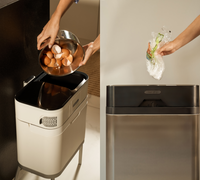
The Organics Collector (OC) was designed with these barriers in mind. The OC reduces moisture buildup and controls odor in collected food scraps. A container that doesn't smell and doesn't attract flies is a much easier sell than a conversation about landfill methane.

For shared living situations, the OC also makes it easier to agree on a system — because there's less to manage. Emptying a contained, odor-controlled unit once or twice a week is a much smaller task than managing a standard bin that needs attention every day or two.

using OC in the kitchen

Getting a whole household to sort waste consistently is more of a logistics problem than a shared-values one. Set up the right system, reduce the friction, and most conversations turn into genuine behavior change.

Make the system do the work

The Organics Collector handles the sensory barriers that stop most households from sorting food scraps consistently.

Shop the Organics Collector → Explore Clear Drop →


Latest posts All posts

Can You Compost Cooked Food? What Goes In (And What Doesn't)

Can You Compost Cooked Food? What Goes In (And What Doesn't)

  You're already full but looking down at a half-eaten plate. You pause. The compost bin is ri...
6 Steps to Launching a ZeroTrash Program at Your Organization

6 Steps to Launching a ZeroTrash Program at Your Organization

Sustainability intentions are easy. Operational sustainability is harder — and far more val...
The Real Difference Between Composting and Organic Waste Collection

The Real Difference Between Composting and Organic Waste Collection

Most people trying to manage food waste hit the same wall. Backyard composting requires outdoor...
Organic Waste Laws by State: What's Already Required and What's Coming

Organic Waste Laws by State: What's Already Required and What's Coming

Most conversations about composting start with legitimate questions: Why does it matter? What d...
How To Talk to Your Roommates (or Partner) About Waste Sorting

How To Talk to Your Roommates (or Partner) About Waste Sorting

You've already done the hard work: figured out how to sort your food scraps, learned that soft ...
Food Scraps in the Landfill: What's Actually Happening Underground

Food Scraps in the Landfill: What's Actually Happening Underground

Most food scraps end up in landfills, where they produce methane — a greenhouse gas far more po...
Atlantic Health Demonstrates Diversion of One Ton of Plastic Waste Annually with SPC

Atlantic Health Demonstrates Diversion of One Ton of Plastic Waste Annually with SPC

Single-use plastic waste is one of the most persistent challenges facing healthcare facilities ...
Earth Day 2026: 5 Waste Habits That Make a Real Difference at Home

Earth Day 2026: 5 Waste Habits That Make a Real Difference at Home

🌍 Earth Day 2026 5 Small Habits That Actually Reduce Household Wast...
The Organics Collector as a Community Tool: Why Early Adopters Are Leading the Change

The Organics Collector as a Community Tool: Why Early Adopters Are Leading the Change

Most people assume that waste habits are shaped by systems — city programs, building rules, mun...
How Sustainable Practices Help Attract and Retain Business Customers

How Sustainable Practices Help Attract and Retain Business Customers

"Our clients' clients are holding them accountable for sustainability, and that pressure trave...
Why Your Kitchen Compost Bin Still Smells and What Actually Fixes It

Why Your Kitchen Compost Bin Still Smells and What Actually Fixes It

"I tried bins with filters before. They still had fruit flies and odor — I was already thinkin...
What is an Organics Collector? (And Why It’s Not a Composter)

What is an Organics Collector? (And Why It’s Not a Composter)

What Is an Organics Collector? (And Why It's Not a Composter) A quick search for a "composter a...
Global Recycling Day: The Reality of  Recycling and How You Can Help Improve the Stats

Global Recycling Day: The Reality of Recycling and How You Can Help Improve the Stats

March 18 is Global Recycling Day, an international initiative created by the Global Recycling F...
Soft Plastic Recycling Myths That Stop People from Taking Action

Soft Plastic Recycling Myths That Stop People from Taking Action

Soft plastic recycling myths that stop people from taking action Soft plastic recycling can be ...
How ZeroTrash Initiatives Improve Workplace Culture and Attract Eco-Conscious Talent

How ZeroTrash Initiatives Improve Workplace Culture and Attract Eco-Conscious Talent

Plus, A 6-Step Approach to Implementing ZeroTrash Adoption Sustainability is no longer a side ini...
Mandatory Organic Waste Separation in New York: How To Comply Without Odors, Messes, or Fines

Mandatory Organic Waste Separation in New York: How To Comply Without Odors, Messes, or Fines

Over the past couple of years, New York City has steadily changed how residential waste is ...
UCSF Health's Mission Bay Hospital Achieves Guaranteed Recycling of Pharmacy Soft Plastic Waste with Clear Drop SPC

UCSF Health's Mission Bay Hospital Achieves Guaranteed Recycling of Pharmacy Soft Plastic Waste with Clear Drop SPC

Healthcare facilities generate massive amounts of plastic waste daily, and California's ambitiou...
How To Compost Eggshells and Vegetable Scraps the Right Way: Faster, Nutrient-Rich Composting & Zero-Waste Kitchen Tips

How To Compost Eggshells and Vegetable Scraps the Right Way: Faster, Nutrient-Rich Composting & Zero-Waste Kitchen Tips

In many homes, food scraps make up around 25% to 30% of household waste. When sent to landfills, ...
Soft Plastic Compactor vs. Curbside Recycling: The Real Difference

Soft Plastic Compactor vs. Curbside Recycling: The Real Difference

Most people assume recycling works when something goes into the blue bin. But for soft...
How Your Household Can Save Up to $240 a Year on Trash Costs

How Your Household Can Save Up to $240 a Year on Trash Costs

Household trash bills are rarely questioned. Most people accept them as a fixed cost, just like...
How ZeroTrash® AI Helps You Identify Soft Plastics Correctly

How ZeroTrash® AI Helps You Identify Soft Plastics Correctly

ZeroTrash® AI is designed to take the guesswork out of everyday waste decisions. Using a camer...
Why CES 2026 Shifted the Conversation Around Household Waste

Why CES 2026 Shifted the Conversation Around Household Waste

CES has always been a place for bold ideas and ambitious visions. But this year, we noticed a sub...
How to Compost in an Apartment (Without Annoying Your Neighbors or Your Landlord)

How to Compost in an Apartment (Without Annoying Your Neighbors or Your Landlord)

Many people still believe composting requires a yard. In reality, modern indoor composting work...
Post-Holiday Waste Reset: Starting 2026 With a Clean, ZeroTrash® Kitchen

Post-Holiday Waste Reset: Starting 2026 With a Clean, ZeroTrash® Kitchen

The holidays may bring plenty of celebration — but they can also leave a big mess, between a clut...
From Trash to Treasure: Real Products Made From Recycled Soft Plastics (and How Clear Drop Makes It Happen)

From Trash to Treasure: Real Products Made From Recycled Soft Plastics (and How Clear Drop Makes It Happen)

Fun fact: Soft plastics aren’t “unrecyclable.” They’ve just been collected the wrong way for over...
Holiday Composting Guide 2025: How to Reduce Waste at Christmas & New Year Events

Holiday Composting Guide 2025: How to Reduce Waste at Christmas & New Year Events

The holidays bring plenty of food, cheer, and …. waste? With all those extra food scraps, packagi...
How Much Food Americans Waste and What You Can Do

How Much Food Americans Waste and What You Can Do

Key Takeaways Americans waste 30%-40% of their total food supply each year ...
How the Shaw Institute Successfully Started to Recycle Laboratory Soft Plastic Waste for the First Time with SPC

How the Shaw Institute Successfully Started to Recycle Laboratory Soft Plastic Waste for the First Time with SPC

The Shaw Institute in Blue Hill, Maine, is a respected nonprofit research organization studying t...
10 Soft Plastics You Didn’t Know You Could Recycle at Home

10 Soft Plastics You Didn’t Know You Could Recycle at Home

Key Takeaways Only 1% of U.S. households have access to curbside film recyc...
How Clear Drop’s Soft Plastic Compactor (SPC) Recycling System Works | Clear Drop

How Clear Drop’s Soft Plastic Compactor (SPC) Recycling System Works | Clear Drop

At Clear Drop, we're redefining what responsible soft plastic recycling looks like. Our Sof...
How Geekdom sparked early wins in soft plastic recovery with the Clear Drop's SPC

How Geekdom sparked early wins in soft plastic recovery with the Clear Drop's SPC

Geekdom is a cornerstone of San Antonio’s startup and innovation ecosystem. Spread across four fl...
How Trinity University advanced soft plastic recycling with the SPC

How Trinity University advanced soft plastic recycling with the SPC

Flexible plastic waste is one of the most persistent challenges on college campuses. From snack w...
From soft plastic to microplastic: what to know

From soft plastic to microplastic: what to know

Soft plastic packaging surrounds almost every product we buy — bags, wrappers, film, shippi...
Survey reveals trash sparks more fights than childcare, and why recycling Is at the heart of It

Survey reveals trash sparks more fights than childcare, and why recycling Is at the heart of It

Trash duties are the most underestimated part of modern household life—yet they’re one of the big...
How one office building pilot became a model for smarter soft plastic waste reduction

How one office building pilot became a model for smarter soft plastic waste reduction

Commercial buildings generate a large share of soft plastic waste — from deliveries, shipments, ...
Official rules: Clear Drop OC pre-order giveaway

Official rules: Clear Drop OC pre-order giveaway

The drawing was heldWINNER SELECTION VIDEO1. SPONSOR The Clear Drop Pre-Order Giveaway (the “Give...
Fixing the broken recycling system: why Clear Drop® exists

Fixing the broken recycling system: why Clear Drop® exists

The global recycling system is struggling to keep up with the waste we generate. Most soft pla...
Getting started with soft plastic waste collection at home

Getting started with soft plastic waste collection at home

Flexible packaging makes everyday life easier, but most soft plastics still end up in landf...
How Eduardo's Bridal & Tuxedo reduced soft plastic waste volume by 90% with the SPC

How Eduardo's Bridal & Tuxedo reduced soft plastic waste volume by 90% with the SPC

Garment retail businesses rely heavily on flexible plastic packaging to protect inventory. But on...
Clear Drop: how we’re revolutionizing home waste management

Clear Drop: how we’re revolutionizing home waste management

Most household waste still ends up in landfills, not because people do not want to recycle, but b...
Why business recycling matters: a key to corporate sustainability

Why business recycling matters: a key to corporate sustainability

Corporate sustainability is now a critical business priority. Both employees and customers ...
Tackling plastic in the healthcare industry: challenges and solutions

Tackling plastic in the healthcare industry: challenges and solutions

U.S. healthcare produces more than 5 million tons of waste every year, and plastics account for...
Composting: electric vs. professional or traditional options

Composting: electric vs. professional or traditional options

In the United States, food scraps make up a significant share of household waste — yet only...
Soft plastic recycling: key challenges and solutions

Soft plastic recycling: key challenges and solutions

Soft plastics like grocery bags, bubble wrap, and packaging film make up a growing share of...
All posts

FAQs

Accept that you can't force the habit, and focus on your setup. Create a system that makes the preferred behavior the easiest option. When you put a food-scrap container in a convenient location and clearly label it, it’ll get used by people who would never describe themselves as interested in composting. The behavior follows the path of least resistance.

Choose a neutral moment, not right after something was sorted wrong. Frame the conversation as wanting to set up a shared system rather than correcting behavior. Ask what would make it easier for the other person rather than explaining why it matters to you. People are more likely to adopt a habit when they've had input into the system than when they've been told to follow one.

Visibility is the most reliable driver of consistent behavior. Move the food-scrap container somewhere that's in sight during normal kitchen use. Clearly label the bins to remove the moment of uncertainty that causes people to default to the general trash. Also, create a schedule for emptying so that everyone shares this responsibility.

Yes, for two reasons. First, the habit transfers. Research on household behavior shows that habits formed in one living situation carry into the next. Second, the investment is minimal and portable. A countertop container can easily move with you.

You can still make a meaningful difference even if others aren't participating. EPA data shows that 58% of fugitive methane from U.S. landfills comes specifically from food waste. Every ton diverted is a measurable reduction. At the same time, visible sorting behavior has a real effect on others in the household over time. Research consistently finds that when one household member sorts consistently, others tend to follow without being asked.