Most people trying to manage food waste hit the same wall. Backyard composting requires outdoor space. Worm bins require ongoing maintenance. Electric composters require a big budget and a plan for the output. Municipal pickup requires a city to already have the infrastructure. And when any of these options fail to fit, most people give up — especially when they assume composting and organic waste collection are the same thing. They're not.
Handle collection first — before composting begins
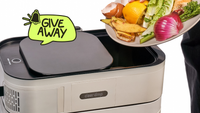
The Clear Drop Organics Collector keeps food scraps odor-free and ready for pickup — built for apartments and compact kitchens.
See the Organics Collector →Americans live in apartment buildings where outdoor composting is not an option, per the National Multifamily Housing Council
of all municipal solid waste sent to U.S. landfills is food — the single largest category, per the U.S. EPA
increase in residential food waste collection access between 2021 and 2023 — yet most U.S. households still have no curbside organics program, per BioCycle
estimated annual value of food wasted at the consumer level in the U.S., per ReFED's Insights Engine
Below are the five main methods for handling organic waste at home — what each one actually does and who it works for.

Why It's Easy to Confuse Composting and Organic Waste Collection
The confusion starts with terminology. The two things are genuinely different, but they get used interchangeably all the time.
Composting is a biological process. Organic material breaks down through microbial activity, heat, or worms and eventually becomes a soil amendment. It requires time, active management, and in most cases, physical space.
Organic waste collection is a logistical function. Material is gathered, stored, and transferred to processing infrastructure — a municipal composting facility, an anaerobic digestion plant, or another industrial system. The household's job is collection. What happens after is handled elsewhere.
When the two get mixed up, people assume participation requires outdoor space and some understanding of biology. In practice, many cities already offer organic waste pickup. Individual homes just need a clean way to hold food scraps between pickups. That's a collection problem, not a composting problem.
Method 1: Backyard Composting
Backyard composting is the oldest approach. Food scraps, yard waste, and cardboard are layered in an outdoor bin or pile and left to decompose over weeks or months. Managed well, it produces finished compost that goes back into garden soil.
The U.S. Composting Council identifies hot composting — keeping a pile between 130°F and 160°F through regular turning and moisture control — as the most efficient method. Done properly, it kills pathogens and weed seeds and produces finished compost in four to eight weeks.
Most home piles don't run that way. They run cold: slower, less demanding, and only functional over months rather than weeks. The compost is still useful — it just takes longer and needs more space to work.
Works well for homeowners with outdoor space who have a garden for the finished compost and are comfortable with physical upkeep. Doesn't work for anyone without outdoor access, or anyone deterred by odors, pests, or the labor of turning a pile.
Method 2: Vermicomposting (Worm Bins)
Vermicomposting uses red wiggler worms (Eisenia fetida) to convert food scraps into worm castings — a nutrient-dense soil amendment that many gardeners rate above conventional compost. Research published in Bioresource Technology supports this: vermicompost consistently outperforms traditional compost in plant growth trials due to higher microbial activity and plant-available nutrients.
The method can work indoors with bins that fit in a kitchen, closet, or under a sink. But it's a living system, and living systems require attention. Worms need moisture regulation, stable temperatures (55°F to 77°F), appropriate bedding, and careful feeding. Overfeeding or wrong materials will produce odor within days.
Works well for gardeners who want high-quality soil amendment and are willing to manage a small ecosystem. Doesn't work for high-volume households, anyone without patience for biological maintenance, or renters who can't guarantee stable conditions year-round.
Method 3: Electric Composters
Electric composters — also marketed as food waste processors or dehydrators — use heat, grinding, and airflow to reduce food scraps to a dry, lower-volume output. This category includes devices from Lomi, Reencle, Mill, GEME, and Vitamix, among others.
One important thing to know before buying: most electric composters don't produce finished compost in the agronomic sense. The output — typically a dried, ground material — requires further decomposition before it functions as a soil amendment. Manufacturers usually call it "pre-compost" or "food grounds." After six months of testing the Lomi 3, Serious Eats concluded the device is more of a scraps dehydrator than a countertop composter.
Mill takes a different approach with a subscription that includes shipping the dried output back for industrial composting, at around $360 per year for the full service. Reencle uses live microbes rather than heat to produce something closer to finished compost, though it requires continuous operation and ongoing maintenance.
Where electric composters deliver is volume reduction. Most dehydrator-style cycles run three to five hours and cut material by up to 90% in mass. The tradeoffs are cost (Lomi runs $499 to $599, Reencle around $499, Mill at approximately $360 per year), ongoing filter replacement costs ranging from $47 to over $200 annually, energy use, and the practical question of what to do with the output.
Works well for households willing to invest in equipment, those generating consistent food waste volume, and people who want rapid processing without biological management. Doesn't work for budget-constrained households (filter costs alone can exceed $200 annually), renters without a plan for the output, or anyone expecting finished compost without further decomposition.
Method 4: Municipal Organics Pickup
Municipal organics programs collect food scraps — and in many cities, compostable packaging and food-soiled paper — through a dedicated bin on a regular schedule. Material goes to industrial composting or anaerobic digestion facilities operating at a scale no household system can replicate.
The EPA's 2030 Food Loss and Waste Reduction Goal names municipal infrastructure as essential to reaching national diversion targets. San Francisco's Zero Waste Program — which exceeded 80% landfill diversion — was built on consistent household-level participation in exactly this kind of collection, according to SF Environment.
Access is the main barrier. A 2023 BioCycle nationwide survey found residential access to food waste collection grew 49% between 2021 and 2023, but the majority of U.S. households still have no curbside organics program available. For those who do have access, participation is often lower than expected — not from lack of interest, but because storing scraps cleanly between pickups is difficult without the right container.
Works well for households in cities with active organics pickup programs. Doesn't work for households outside served areas or anyone without a practical indoor collection solution for the days between pickups.
Method 5: Organics Collection System (OC)
The Organics Collector (OC) is not a composter. It doesn't process, transform, or break down organic material. Clear Drop is direct about this.
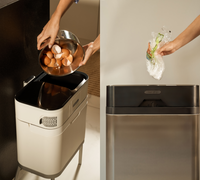
It's a hands-free countertop collection device, sealed and built for daily indoor use. Its job is to hold food scraps cleanly between municipal pickups.
ReFED's Insights Engine consistently points to the same household-level barriers to food waste diversion: odors, pests, frequent emptying, and uncertainty about what qualifies as organic waste. The OC addresses each of these:
- A carbon filter and fan system that contains odors between pickups
- A hands-free lid that seals automatically after every use
- A large-capacity design that holds scraps for up to one week between empties
With the OC, there are no sorting decisions — all food scraps go in. The device only works where municipal organics pickup already exists. The household's job is to collect; the OC makes that task frictionless.
Works well for apartment residents and households in cities with organics pickup programs who want a low-effort, odor-controlled collection system with no biological management required. Doesn't work for households outside municipal organics pickup zones who need a standalone processing solution.

At a Glance: All Five Methods Compared
| Method | Smell Risk | Space Required | Effort Level | Usable Output | Apartment-Friendly |
|---|---|---|---|---|---|
| Backyard Composting | Moderate to High | Large (outdoor) | High | Finished compost | No |
| Vermicomposting | Low to Moderate | Small to Medium | Moderate to High | Worm castings | Maybe |
| Electric Composter | Low | Small (countertop) | Low | Pre-compost / dried scraps | Mostly yes |
| Municipal Pickup | Low | Small (bin) | Low | Handled by city | Yes |
| Organics Collector (OC)* | Very Low | Small (countertop) | Very Low | Municipal stream | Yes |
*The OC requires an active municipal organics pickup program in your area.
Which Method Is Right for You?
The answer depends on where you live and how much ongoing effort makes sense for your household.
Backyard composting. If you have outdoor space and a garden, this is the most complete option. You put the most in and get the most back — finished compost you can use directly in your soil.
Vermicomposting. If you're a gardener looking for higher-quality soil amendment and are comfortable managing a living system, worm bins produce better output than conventional composting. The effort is higher, but the results reflect that.
Electric composter. If volume reduction is your priority and you're willing to spend on equipment, an electric composter handles odor and mass reduction well. The main thing to work out is what you do with the output.
Municipal organics pickup. If your city runs a program, this is the lowest-effort path to meaningful diversion. The infrastructure is already there — you just need a clean way to participate.
Organics Collector. For apartment residents in cities with municipal organics pickup, the OC is the most practical daily solution. No outdoor space, no biological knowledge, no sorting. You collect your scraps; your city handles the rest.

The Organics Collector: Built for the Apartment Kitchen
The Organics Collector sits firmly on the collection side of food waste management — and that's by design.
It mounts on a wall, stands on the floor, or sits on a countertop, wherever works best in your kitchen. It also:
- Takes all food scraps without sorting
- Features an automatic sliding lid that opens and closes on its own after every use
- Includes a carbon filter and fan system to keep odors contained for up to one week without emptying
- Requires no outdoor access or biological knowledge
- Uses very little energy to run continuously
In cities with active organic waste pickup, the OC lets you take full advantage of an existing municipal service while keeping the indoor experience clean and effortless. Simply collect your scraps and empty them on pickup day — processed at industrial scale, no effort on your end.
You handle the collection. Your city handles the rest.
Keep organic waste out of your trash — before it reaches the compost bin
The Clear Drop Organics Collector makes daily food waste separation clean, odor-free, and effortless — designed for apartments and compact kitchens.
See the Organics Collector →