How ZeroTrash Initiatives Improve Workplace Culture and Attract Eco-Conscious Talent

How ZeroTrash Initiatives Improve Workplace Culture and Attract Eco-Conscious Talent

Tod Hardin
How ZeroTrash Initiatives Improve Workplace Culture and Attract Eco-Conscious Talent
Navigation

Plus, A 6-Step Approach to Implementing ZeroTrash Adoption

Sustainability is no longer a side initiative managed quietly by facilities teams. It's a cultural signal.

In today's workforce — especially among Millennials and Gen Z — environmental responsibility influences where people choose to work, how long they stay, and how deeply they engage. ZeroTrash initiatives, including pre-recycling systems and soft plastic diversion programs, are emerging as powerful tools not just for waste reduction — but for strengthening workplace culture and attracting purpose-driven talent.

Here's how.

"ESG used to live in the boardroom. Now it lives in the break room. The shift we're seeing is that employees at every level want to feel that their employer is a force for good — not just profitable, but responsible. The organizations that understand this aren't just building better sustainability programs. They're building better cultures, and ultimately, better businesses." Ivan Arbouzov, Founder & CEO, Clear Drop

The Workforce Has Changed. Has Your Workplace Kept Up?

A generation ago, a company's sustainability efforts rarely entered into a candidate's decision calculus. Today, they sit near the top.

Among employed adults surveyed by Deloitte Consumer Center in March 2023 for its global State of the Consumer survey, 69% said they want their companies to invest in sustainability efforts, including reducing carbon, using renewable energy, and reducing waste.

Additionally, according to Deloitte's 2025 Gen Z and Millennial Survey, 70% of younger workers say a company's environmental credentials are important when evaluating an employer. Nearly 15% have already left a job due to concerns about sustainability, and around 40% report rejecting job offers because a company's values did not align with their own. Perhaps most striking, nearly half of respondents say they have actively pressured their employers to take more meaningful action on environmental issues.

Environmental stewardship consistently ranks among the top issues they care about. And critically, they can tell the difference between a company that genuinely walks the talk and one that simply checks a box on a CSR report.

ZeroTrash initiatives — comprehensive programs designed to eliminate landfill-bound waste at the source — are becoming one of the clearest, most visible signals a company can send. Unlike solar panels on a distant rooftop or carbon offsets buried in a footnote, a ZeroTrash program plays out in the everyday experience of every employee.

That visibility is what makes it powerful.

What "ZeroTrash" Actually Means in Practice

ZeroTrash isn't just about recycling. It's a systems-level commitment to rethinking how waste is generated, captured, and redirected before it ever reaches a landfill — and it represents one of the most effective waste reduction strategies available to businesses today.

In practice, it typically includes:

Pre-Recycling Systems — Choosing products and packaging upstream to minimize what needs to be disposed of in the first place. This might mean switching to compostable serviceware in a cafeteria, opting for bulk dispensers over single-use packaging, or partnering with vendors who take back their own materials.

Soft Plastic Diversion Programs — One of the most overlooked waste streams in commercial recycling. Film plastics — plastic bags, wrap, pouches, shrink wrap — are notoriously difficult to recycle through conventional waste hauling services. Soft plastic diversion programs create dedicated collection pathways that route these materials to appropriate processors, keeping them out of landfills and the broader waste stream. Purpose-built tools like the Clear Drop Soft Plastic Compactor (SPC) are making this more practical for workplaces of all sizes — compressing loose film plastics into dense, shippable blocks that go directly to certified U.S. recycling facilities, with no sorting burden on employees. Learn more about soft plastic recycling challenges and solutions.

Composting and Organics Diversion — Separating food scraps and organic materials from general waste dramatically reduces methane emissions from landfills. In workplace settings — break rooms, cafeterias, communal kitchens — this is often where landfill diversion efforts visibly stall, because food waste collection done poorly means odors, insects, and employee frustration. The Clear Drop Organics Collector (OC) addresses this directly, slowing microorganism growth and controlling odors so that organics diversion becomes something people actually want to participate in rather than avoid.

Zero-to-Landfill Tracking — Measuring and reporting on waste diversion rates, giving employees and leadership a real, quantifiable picture of impact. For organizations serious about landfill reduction, this data becomes the backbone of ESG reporting and sustainability communications.

Together, these systems create a workplace where sustainability isn't aspirational — it's operational.

Why It Matters for Culture

Culture is built from the accumulation of small signals. What gets celebrated. What gets resourced. What gets done even when no one is watching.

When employees walk into a break room and see clearly labeled stations for compost, soft plastics, recycling, and landfill — and when those stations are actually maintained and working — they receive a clear message: this organization takes its values seriously enough to operationalize them.

That message has downstream effects that go far beyond waste management for businesses.

Shared purpose drives engagement. Employees who feel connected to a meaningful organizational mission are more productive, more loyal, and more likely to act as ambassadors for the company. ZeroTrash initiatives give teams something tangible to rally around — a visible, participatory sustainability effort they're a part of every single day.

Visible action builds trust. One of the biggest drivers of employee disengagement is the perception that leadership talks about values without living them. A ZeroTrash program is hard to fake. The bins are either there or they're not. The diversion rates either go up or they don't. That operational transparency builds exactly the kind of institutional trust that retention depends on.

Collective participation creates community. Sustainability programs that invite employee participation — waste audits, green team challenges, department-level diversion competitions — give people a reason to collaborate across silos. That cross-functional engagement strengthens relationships and improves the social fabric of the organization.

The Talent Acquisition Angle

Recruiting is increasingly a values conversation. Candidates research companies before they apply. They read Glassdoor reviews that mention sustainability. They look for ESG reports. They ask pointed questions in interviews about environmental commitments.

A robust ZeroTrash initiative gives HR and recruiting teams something concrete to point to — not a vague "we care about the planet" statement, but a specific, documented commercial recycling and waste diversion program with measurable outcomes.

Consider the competitive advantage this creates:

In high-demand talent markets, two otherwise equivalent offers may come down to cultural fit and values alignment. A company that can demonstrate a genuine, operational commitment to sustainability — one that employees interact with daily — has a meaningful edge over one that cannot.

For early-career candidates, this matters even more. Gen Z in particular applies a values filter early in their job search, and they're quick to identify greenwashing. A ZeroTrash initiative with real data behind it passes that test.

"For a research organization like ours, credibility is everything. The people considering working with us, joining our team, or supporting our mission in Blue Hill want to see that we operate with integrity at every level. Diverting the soft plastics our laboratory generates away from landfill is one of the most concrete ways we can demonstrate that our environmental values aren't confined to our research — they're built into how we run our organization. And that's why we implemented usage of the Clear Drop Soft Plastic Compactor in our day to day operations."Dr. Charles Rolsky, Executive Director & Lead Research Scientist, Shaw Institute

Like they have at the Shaw Institute, when implemented correctly, commercial recycling programs deliver clear, quantifiable returns:

  • The Shaw Institute achieved 94% diversion of laboratory-generated soft plastic waste using dedicated compaction technology. Read the full Shaw Institute case study.
  • An office of 120 employees reduced landfill hauling frequency by 68% within four months.

In specialized sectors — tech, professional services, consumer goods, life sciences — where competition for talent is fierce and candidates have leverage, sustainability credentials are rapidly becoming a baseline expectation rather than a differentiator. Organizations that get ahead of this now will be better positioned than those who treat it as optional.

The Business Case Beyond Talent

While the culture and talent story is compelling on its own, ZeroTrash initiatives also generate hard business value that strengthens the ROI case for leadership:

Operational cost savings. Waste management for businesses is not cheap. Diverting materials from general waste streams — particularly through composting and soft plastic programs — directly reduces hauling volumes and the associated costs. Many organizations that commit to zero-to-landfill targets find they recover a meaningful portion of program costs through waste reduction alone.

Supply chain and vendor alignment. As corporate procurement increasingly screens for ESG credentials, having a documented ZeroTrash program positions your company favorably with customers and partners who have their own sustainability commitments to meet.

Risk mitigation. Regulatory pressure around waste, packaging, and carbon emissions is tightening across industries and geographies. Organizations that build commercial recycling and waste diversion practices now are ahead of compliance requirements that are likely coming regardless.

Brand and reputation. Employees talk. So do clients, investors, and the communities where you operate. A ZeroTrash commitment — particularly one that reaches zero-to-landfill milestones — generates the kind of authentic storytelling that earned media and manufactured marketing cannot replicate. And the halo effect extends beyond the workforce: sustainability credentials are increasingly influencing customer purchasing decisions too. (We explore this in depth in our next post — "How Sustainable Practices Help Attract and Retain Business Customers & Partners.")

Getting Started: 6 Steps to Creating ZeroTrash Adoption

The most common barrier to ZeroTrash adoption isn't will — it's knowing where to begin. The good news is that most successful waste reduction strategies start smaller than organizations expect and build momentum from there.

1. Launch with People, Not Just Policy. A zero waste  program that arrives as a memo and without a champion(s) to lead it will underperform. The infrastructure matters, but so does the human activation layer around it. 

2. Audit First. Understand what you're generating before trying to divert it. A waste audit — even an informal one — will quickly reveal which materials represent your highest-volume, highest-impact streams. For most commercial operations, that's food waste, soft plastics, and corrugated cardboard.

3. Build the Infrastructure. The right bins, placed in the right locations, with clear labeling and employee education, are the backbone of any ZeroTrash program. This sounds basic because it is — and it's also where most programs succeed or fail. Contaminated waste streams undermine diversion rates and increase costs.

4. Partner Strategically. Soft plastic diversion in particular requires the right processing partner. Not all waste haulers can handle film plastics. Finding a partner with the appropriate downstream relationships is critical to actually achieving landfill diversion rather than just collecting materials with nowhere to send them.

5. Measure and Track Results. Track diversion rates from the start. Set goals. Share results with employees. Celebrate milestones. The data is what turns a sustainability initiative into a cultural moment — and what gives your recruiting team something to talk about.

6. Evolve Toward Zero. ZeroTrash is a trajectory, not a switch. Organizations that treat it as a continuous improvement program — reducing landfill waste quarter over quarter — build more durable programs and more authentic sustainability narratives than those chasing a one-time certification.

Download an infographic version of this guide.

Build A Culture Worth Belonging To

The companies winning the war for talent in the next decade will not be the ones with the flashiest perks or the most competitive salaries alone. They'll be the ones that have built cultures worth belonging to — cultures where organizational values are visible in daily operations, not just annual reports.

ZeroTrash initiatives represent exactly that kind of operational values expression. They reduce waste. They reduce costs. They signal commitment to the employees you're trying to retain and the candidates you're trying to attract. And they give everyone in the organization something real to participate in together.

That's not a facilities initiative. That's a talent strategy.


Interested in implementing a ZeroTrash program at your organization? The right partner can help you audit your current waste streams, design the right diversion infrastructure, and connect you with processing networks for even the most challenging materials — including soft plastics. The journey to zero starts with knowing where you are.



Latest posts All posts

Can You Compost Cooked Food? What Goes In (And What Doesn't)

Can You Compost Cooked Food? What Goes In (And What Doesn't)

  You're already full but looking down at a half-eaten plate. You pause. The compost bin is ri...
6 Steps to Launching a ZeroTrash Program at Your Organization

6 Steps to Launching a ZeroTrash Program at Your Organization

Sustainability intentions are easy. Operational sustainability is harder — and far more val...
The Real Difference Between Composting and Organic Waste Collection

The Real Difference Between Composting and Organic Waste Collection

Most people trying to manage food waste hit the same wall. Backyard composting requires outdoor...
Organic Waste Laws by State: What's Already Required and What's Coming

Organic Waste Laws by State: What's Already Required and What's Coming

Most conversations about composting start with legitimate questions: Why does it matter? What d...
How To Talk to Your Roommates (or Partner) About Waste Sorting

How To Talk to Your Roommates (or Partner) About Waste Sorting

You've already done the hard work: figured out how to sort your food scraps, learned that soft ...
Food Scraps in the Landfill: What's Actually Happening Underground

Food Scraps in the Landfill: What's Actually Happening Underground

Most food scraps end up in landfills, where they produce methane — a greenhouse gas far more po...
Atlantic Health Demonstrates Diversion of One Ton of Plastic Waste Annually with SPC

Atlantic Health Demonstrates Diversion of One Ton of Plastic Waste Annually with SPC

Single-use plastic waste is one of the most persistent challenges facing healthcare facilities ...
Earth Day 2026: 5 Waste Habits That Make a Real Difference at Home

Earth Day 2026: 5 Waste Habits That Make a Real Difference at Home

🌍 Earth Day 2026 5 Small Habits That Actually Reduce Household Wast...
The Organics Collector as a Community Tool: Why Early Adopters Are Leading the Change

The Organics Collector as a Community Tool: Why Early Adopters Are Leading the Change

Most people assume that waste habits are shaped by systems — city programs, building rules, mun...
How Sustainable Practices Help Attract and Retain Business Customers

How Sustainable Practices Help Attract and Retain Business Customers

"Our clients' clients are holding them accountable for sustainability, and that pressure trave...
Why Your Kitchen Compost Bin Still Smells and What Actually Fixes It

Why Your Kitchen Compost Bin Still Smells and What Actually Fixes It

"I tried bins with filters before. They still had fruit flies and odor — I was already thinkin...
What is an Organics Collector? (And Why It’s Not a Composter)

What is an Organics Collector? (And Why It’s Not a Composter)

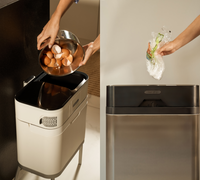
What Is an Organics Collector? (And Why It's Not a Composter) A quick search for a "composter a...
Global Recycling Day: The Reality of  Recycling and How You Can Help Improve the Stats

Global Recycling Day: The Reality of Recycling and How You Can Help Improve the Stats

March 18 is Global Recycling Day, an international initiative created by the Global Recycling F...
Soft Plastic Recycling Myths That Stop People from Taking Action

Soft Plastic Recycling Myths That Stop People from Taking Action

Soft plastic recycling myths that stop people from taking action Soft plastic recycling can be ...
How ZeroTrash Initiatives Improve Workplace Culture and Attract Eco-Conscious Talent

How ZeroTrash Initiatives Improve Workplace Culture and Attract Eco-Conscious Talent

Plus, A 6-Step Approach to Implementing ZeroTrash Adoption Sustainability is no longer a side ini...
Mandatory Organic Waste Separation in New York: How To Comply Without Odors, Messes, or Fines

Mandatory Organic Waste Separation in New York: How To Comply Without Odors, Messes, or Fines

Over the past couple of years, New York City has steadily changed how residential waste is ...
UCSF Health's Mission Bay Hospital Achieves Guaranteed Recycling of Pharmacy Soft Plastic Waste with Clear Drop SPC

UCSF Health's Mission Bay Hospital Achieves Guaranteed Recycling of Pharmacy Soft Plastic Waste with Clear Drop SPC

Healthcare facilities generate massive amounts of plastic waste daily, and California's ambitiou...
How To Compost Eggshells and Vegetable Scraps the Right Way: Faster, Nutrient-Rich Composting & Zero-Waste Kitchen Tips

How To Compost Eggshells and Vegetable Scraps the Right Way: Faster, Nutrient-Rich Composting & Zero-Waste Kitchen Tips

In many homes, food scraps make up around 25% to 30% of household waste. When sent to landfills, ...
Soft Plastic Compactor vs. Curbside Recycling: The Real Difference

Soft Plastic Compactor vs. Curbside Recycling: The Real Difference

Most people assume recycling works when something goes into the blue bin. But for soft...
How Your Household Can Save Up to $240 a Year on Trash Costs

How Your Household Can Save Up to $240 a Year on Trash Costs

Household trash bills are rarely questioned. Most people accept them as a fixed cost, just like...
How ZeroTrash® AI Helps You Identify Soft Plastics Correctly

How ZeroTrash® AI Helps You Identify Soft Plastics Correctly

ZeroTrash® AI is designed to take the guesswork out of everyday waste decisions. Using a camer...
Why CES 2026 Shifted the Conversation Around Household Waste

Why CES 2026 Shifted the Conversation Around Household Waste

CES has always been a place for bold ideas and ambitious visions. But this year, we noticed a sub...
How to Compost in an Apartment (Without Annoying Your Neighbors or Your Landlord)

How to Compost in an Apartment (Without Annoying Your Neighbors or Your Landlord)

Many people still believe composting requires a yard. In reality, modern indoor composting work...
Post-Holiday Waste Reset: Starting 2026 With a Clean, ZeroTrash® Kitchen

Post-Holiday Waste Reset: Starting 2026 With a Clean, ZeroTrash® Kitchen

The holidays may bring plenty of celebration — but they can also leave a big mess, between a clut...
From Trash to Treasure: Real Products Made From Recycled Soft Plastics (and How Clear Drop Makes It Happen)

From Trash to Treasure: Real Products Made From Recycled Soft Plastics (and How Clear Drop Makes It Happen)

Fun fact: Soft plastics aren’t “unrecyclable.” They’ve just been collected the wrong way for over...
Holiday Composting Guide 2025: How to Reduce Waste at Christmas & New Year Events

Holiday Composting Guide 2025: How to Reduce Waste at Christmas & New Year Events

The holidays bring plenty of food, cheer, and …. waste? With all those extra food scraps, packagi...
How Much Food Americans Waste and What You Can Do

How Much Food Americans Waste and What You Can Do

Key Takeaways Americans waste 30%-40% of their total food supply each year ...
How the Shaw Institute Successfully Started to Recycle Laboratory Soft Plastic Waste for the First Time with SPC

How the Shaw Institute Successfully Started to Recycle Laboratory Soft Plastic Waste for the First Time with SPC

The Shaw Institute in Blue Hill, Maine, is a respected nonprofit research organization studying t...
10 Soft Plastics You Didn’t Know You Could Recycle at Home

10 Soft Plastics You Didn’t Know You Could Recycle at Home

Key Takeaways Only 1% of U.S. households have access to curbside film recyc...
How Clear Drop’s Soft Plastic Compactor (SPC) Recycling System Works | Clear Drop

How Clear Drop’s Soft Plastic Compactor (SPC) Recycling System Works | Clear Drop

At Clear Drop, we're redefining what responsible soft plastic recycling looks like. Our Sof...
How Geekdom sparked early wins in soft plastic recovery with the Clear Drop's SPC

How Geekdom sparked early wins in soft plastic recovery with the Clear Drop's SPC

Geekdom is a cornerstone of San Antonio’s startup and innovation ecosystem. Spread across four fl...
How Trinity University advanced soft plastic recycling with the SPC

How Trinity University advanced soft plastic recycling with the SPC

Flexible plastic waste is one of the most persistent challenges on college campuses. From snack w...
From soft plastic to microplastic: what to know

From soft plastic to microplastic: what to know

Soft plastic packaging surrounds almost every product we buy — bags, wrappers, film, shippi...
Survey reveals trash sparks more fights than childcare, and why recycling Is at the heart of It

Survey reveals trash sparks more fights than childcare, and why recycling Is at the heart of It

Trash duties are the most underestimated part of modern household life—yet they’re one of the big...
How one office building pilot became a model for smarter soft plastic waste reduction

How one office building pilot became a model for smarter soft plastic waste reduction

Commercial buildings generate a large share of soft plastic waste — from deliveries, shipments, ...
Official rules: Clear Drop OC pre-order giveaway

Official rules: Clear Drop OC pre-order giveaway

The drawing was heldWINNER SELECTION VIDEO1. SPONSOR The Clear Drop Pre-Order Giveaway (the “Give...
Fixing the broken recycling system: why Clear Drop® exists

Fixing the broken recycling system: why Clear Drop® exists

The global recycling system is struggling to keep up with the waste we generate. Most soft pla...
Getting started with soft plastic waste collection at home

Getting started with soft plastic waste collection at home

Flexible packaging makes everyday life easier, but most soft plastics still end up in landf...
How Eduardo's Bridal & Tuxedo reduced soft plastic waste volume by 90% with the SPC

How Eduardo's Bridal & Tuxedo reduced soft plastic waste volume by 90% with the SPC

Garment retail businesses rely heavily on flexible plastic packaging to protect inventory. But on...
Clear Drop: how we’re revolutionizing home waste management

Clear Drop: how we’re revolutionizing home waste management

Most household waste still ends up in landfills, not because people do not want to recycle, but b...
Why business recycling matters: a key to corporate sustainability

Why business recycling matters: a key to corporate sustainability

Corporate sustainability is now a critical business priority. Both employees and customers ...
Tackling plastic in the healthcare industry: challenges and solutions

Tackling plastic in the healthcare industry: challenges and solutions

U.S. healthcare produces more than 5 million tons of waste every year, and plastics account for...
Composting: electric vs. professional or traditional options

Composting: electric vs. professional or traditional options

In the United States, food scraps make up a significant share of household waste — yet only...
Soft plastic recycling: key challenges and solutions

Soft plastic recycling: key challenges and solutions

Soft plastics like grocery bags, bubble wrap, and packaging film make up a growing share of...
All posts

FAQs

A standard commercial recycling program typically handles a limited set of materials — aluminum, cardboard, glass, rigid plastics — through conventional curbside-compatible streams. A ZeroTrash initiative goes further. It addresses the full waste profile of an organization, including streams that standard recycling can't touch: soft plastics, organics, food waste, and specialty materials. The goal isn't just recycling more — it's eliminating landfill-bound waste entirely through a combination of source reduction, diversion infrastructure, and verified downstream processing. Where a recycling bin is a fixture, ZeroTrash is a system.

ZeroTrash programs scale well to organizations of almost any size. In fact, mid-sized companies often have an advantage: they're nimble enough to implement waste reduction strategies quickly, without the bureaucracy that can slow rollout in large enterprises. The key is starting with your highest-volume waste streams and building from there. Most organizations find that their first diversion program — whether soft plastics or organics — proves out the model clearly enough to justify expanding it. You don't need to solve everything at once to make a meaningful start.

This is one of the most common barriers organizations hit, and your hauler is telling you the truth — most standard waste management providers cannot process film plastics. The solution is a dedicated soft plastic diversion pathway that bypasses your hauler entirely. Purpose-built compaction tools like the Clear Drop Soft Plastic Compactor (SPC) compress loose film plastics on-site into dense, shippable blocks that go directly to certified U.S. recycling processors. No sorting burden on your team, no dependence on your general hauler's capabilities. It's a purpose-built answer to what has historically been a purpose-built problem.

The most durable participation comes from making the right behavior the easy behavior. That means clear, intuitive signage at every collection point; stations placed where waste is actually generated rather than tucked in a corner; and regular communication about results. Sharing monthly diversion numbers — "we diverted 400 pounds of soft plastic from landfill last month" — gives employees a sense of real impact. Internal green teams, department-level challenges, and recognition of milestones all help sustain momentum beyond the initial launch. People participate in what feels meaningful and visible. Make both true.

At minimum, track total waste generated, total waste diverted by stream (organics, soft plastics, general recycling), and your landfill diversion rate as a percentage. Over time, you want to see diversion rates trending upward and landfill volumes trending down. This data serves multiple purposes: it informs your ESG reporting, it gives your recruiting team concrete claims to make in candidate conversations, and it identifies which streams still have room for improvement. For organizations subject to client procurement questionnaires or sustainability audits, a clean data trail is increasingly the difference between winning and losing contracts.

It depends on your current waste profile, but for most organizations the economics are better than expected. Waste management for businesses is priced by volume and weight — diverting material from that stream directly reduces hauling costs. Organics diversion in particular tends to generate meaningful savings because food waste is both heavy and expensive to haul. Soft plastic diversion costs depend on program design, but purpose-built compaction tools that enable direct-to-processor shipping often deliver a more favorable cost structure than paying a hauler's premium rates for the same material. The business case is strongest when you factor in the indirect value: talent retention, client relationships, and avoided future compliance costs.

Lead with specifics. "We're committed to sustainability" is a statement anyone can make. "We diverted 12 tons of material from landfill last year, including all of our facility's soft plastics, through a verified partnership with certified U.S. processors" is a claim that carries weight — and that candidates, especially Gen Z, will find credible. The difference between authentic sustainability communication and greenwashing is the presence of operational detail and verifiable data. Build the program first. Let the story emerge from what the program actually does. Then your recruiting team has something real to say — and something real for new hires to see on day one.