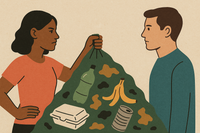
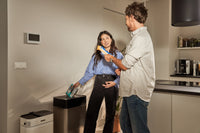
Couple sorting food waste in a modern kitchen with Clear Drop OC

The Organics Collector as a Community Tool: Why Early Adopters Are Leading the Change

Alena Hileuskaya
Couple sorting food waste in a modern kitchen with Clear Drop OC
Navigation

Most people assume that waste habits are shaped by systems — city programs, building rules, municipal infrastructure. In practice, they are shaped by people. Specifically, the person in a building who does it first and makes it look easy.

24%

of all municipal solid waste sent to U.S. landfills is food — the single largest material category, per the EPA

40M+

Americans live in apartment buildings where behavior spreads through proximity and observation faster than anywhere else

80%+

landfill diversion achieved by San Francisco's Zero Waste Program — built on consistent household-level participation

1

household willing to go first is enough to normalize a habit across a floor, a building, and eventually the building next door

Sources: U.S. EPA — Food Material-Specific Data · National Multifamily Housing Council · SF Environment — Zero Waste Program

Behavioral research consistently shows this. According to the Behavioural Insights Team's EAST framework, people are significantly more likely to adopt a new behavior when they see others around them doing it — a phenomenon known as social proof. In shared living environments, this effect is amplified by physical proximity. When a neighbor changes a routine, others observe it without any words exchanged.

This is precisely how recycling adoption has spread — not through mandates but peer-to-peer. One household made the habit visible. Others followed. That is the role of early adopters — and the Organics Collector is the tool making it a repeatable habit.

Two women sorting waste outdoors near compost bins

What Early Adopters Have in Common

They Don't Just Talk — They Do

Early adopters rarely rely on persuasion. Their influence comes through behavior. The World Bank's What a Waste 2.0 report highlights that community-led waste practices demonstrate significantly better long-term sustainability than policy-driven adoption alone — particularly in urban settings where social observation is a constant feature of shared life.

Simply put, people follow people. The moment of influence is rarely dramatic. Someone sees a clean, compact device on a counter and a routine that looks effortless. With genuine curiosity, they ask about it. That is where behavior change actually begins.

Years before he found the Organics Collector, a friend prompted Kris to start separating soft plastics. "Why aren't you doing this?" That one observation from someone he respected was enough to change his behavior permanently. Now Kris is that person for others.

Kris Bugbee — Clear Drop customer, Oregon

They Introduce Tools That Remove Friction

Households that don't separate organic waste are not indifferent about the environment. They are deterred by friction. ReFED's Insights Engine, which tracks barriers to food waste diversion across U.S. households, consistently identifies the same obstacles. The table below maps the most common barriers and how the Organics Collector addresses each.

Common Barrier Why It Stalls Adoption How the OC Addresses It
Odor from accumulating food scraps Unpleasant experience causes people to quit within days Carbon filter + fan system keeps odors contained between pickups
Fruit flies and insects Perceived as unhygienic; puts off the whole household Sealed, hands-free lid closes automatically after each use
Frequent emptying required Small containers need daily attention; routines break quickly Large-capacity design reduces emptying to ~2x per week
No obvious place for a bin Ugly bins get moved to corners and forgotten Compact countertop footprint integrates with kitchen appliances
Unclear what can be composted Uncertainty leads to avoidance Collects all food scraps — no sorting decisions required

Behavior change doesn't require motivation. It requires the removal of obstacles. The right tool is what makes the difference between a habit that lasts and one that doesn't.

Real Stories: From One Kitchen to the Whole Floor

Kris didn't need a new solution when he first found Clear Drop. He had already been separating food waste for years using a sealed stainless steel container and a municipal pickup every two weeks. No odor issues. No real problems. But he upgraded anyway.

He came across Clear Drop through CES coverage on Engadget, initially drawn to the Soft Plastic Compactor. When he returned two weeks later and found it sold out, he discovered the Organics Collector. After researching competing products, he made a decision that went beyond features:

I wanted to support Clear Drop in building a new industry.

Kris Bugbee — Clear Drop customer

That reasoning — supporting a mission, not just buying a product — is characteristic of early adopters across categories. According to Everett Rogers' Diffusion of Innovations framework, early adopters are distinguished by their understanding of the broader significance of what they are adopting. They see themselves as participants in a shift, not just consumers of a product.

For Kris, that meant buying both devices, becoming a willing tester for future product versions, and actively integrating his son and wife into the daily composting routine. When someone asks what the device on his counter is, he has a full answer ready. The Ellen MacArthur Foundation identifies this kind of experience as critical to scaling circular systems: household-level practice that is visible, repeatable, and communicable.

Couple sorting soft plastic packaging into Clear Drop Soft Plastic Compactor at home

How To Find Your People and Let the Habit Spread Naturally

The Organics Collector is a personal device for one kitchen. But the change it enables doesn't stay in that kitchen for long. Forget building-wide initiatives or HOA proposals. The most effective path to wider adoption is finding the people in your existing community who share your values and letting them see a working system up close.

According to the Behavioural Insights Team, behavior change spreads most effectively through communities with shared norms and values. The habit doesn't need to reach everyone — just the right people first.

5 steps to let the habit spread naturally
Start with your own kitchen.
Establish the habit for 30 days before thinking about anyone else. A routine that runs smoothly is more persuasive than any announcement.
Make it visible without performing it.
A clean countertop setup communicates more than a conversation. The question "what is that?" comes on its own.
Share within your existing community.
Talk about it where your values-aligned community already gathers — a neighborhood group, sustainability feed, or friends' chat. You're not recruiting. You're sharing something that works.
Work with existing infrastructure.
If your city already offers organic waste pickup, the habit becomes dramatically easier to sustain.
Let curiosity drive adoption.
Most adoption begins with a genuine question from someone who noticed. Your role is to have an honest, unscripted answer — not a pitch.

Why Being First Matters

Early adopters define what change looks like to everyone who comes after them. If someone's first exposure to organic waste separation is a neighbor's description of odor and inconvenience, they'll disengage quickly. But if they hear about a clean, manageable setup seamlessly integrated into a normal kitchen routine, they'll start paying attention.

According to the National Multifamily Housing Council, over 40 million Americans live in apartment buildings — environments where behaviors spread through proximity and observation faster than in single-family housing. The first household to normalize a habit carries disproportionate influence over the floor, the building, and eventually the building next door.

This is how the diffusion of innovation has always worked

The early adopter functions as a proof of concept. They demonstrate feasibility. They absorb the social risk of being first — and eliminate it for everyone who follows. As the EPA's 2030 Food Loss and Waste Reduction Goal makes clear, reaching national-scale targets requires behavior change at the household level. Policy creates the conditions. People create the norm. And norms begin with the households willing to go first.

The Organics Collector

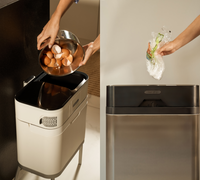
The Organics Collector is not a composter. It does not process or transform organic waste. It is a collection tool: a hands-free, countertop-sized bin designed for daily indoor use, built to hold organic material cleanly between municipal pickups — wherever organic waste collection already exists.

For early adopters, this matters. It means the device fits into existing infrastructure, making it easier to use consistently. Consistent use is what creates the visible behavior that starts conversations, normalizes new routines, and gives others a reference point for what change actually looks like in a real home.

Not a statement. Not a project. It's a habit.


Be the first in your community

The Clear Drop Organics Collector makes daily food waste separation clean, odor-free, and effortless — designed for apartments and compact kitchens.

See the Organics Collector →


Latest posts All posts

Can You Compost Cooked Food? What Goes In (And What Doesn't)

Can You Compost Cooked Food? What Goes In (And What Doesn't)

  You're already full but looking down at a half-eaten plate. You pause. The compost bin is ri...
6 Steps to Launching a ZeroTrash Program at Your Organization

6 Steps to Launching a ZeroTrash Program at Your Organization

Sustainability intentions are easy. Operational sustainability is harder — and far more val...
The Real Difference Between Composting and Organic Waste Collection

The Real Difference Between Composting and Organic Waste Collection

Most people trying to manage food waste hit the same wall. Backyard composting requires outdoor...
Organic Waste Laws by State: What's Already Required and What's Coming

Organic Waste Laws by State: What's Already Required and What's Coming

Most conversations about composting start with legitimate questions: Why does it matter? What d...
How To Talk to Your Roommates (or Partner) About Waste Sorting

How To Talk to Your Roommates (or Partner) About Waste Sorting

You've already done the hard work: figured out how to sort your food scraps, learned that soft ...
Food Scraps in the Landfill: What's Actually Happening Underground

Food Scraps in the Landfill: What's Actually Happening Underground

Most food scraps end up in landfills, where they produce methane — a greenhouse gas far more po...
Atlantic Health Demonstrates Diversion of One Ton of Plastic Waste Annually with SPC

Atlantic Health Demonstrates Diversion of One Ton of Plastic Waste Annually with SPC

Single-use plastic waste is one of the most persistent challenges facing healthcare facilities ...
Earth Day 2026: 5 Waste Habits That Make a Real Difference at Home

Earth Day 2026: 5 Waste Habits That Make a Real Difference at Home

🌍 Earth Day 2026 5 Small Habits That Actually Reduce Household Wast...
The Organics Collector as a Community Tool: Why Early Adopters Are Leading the Change

The Organics Collector as a Community Tool: Why Early Adopters Are Leading the Change

Most people assume that waste habits are shaped by systems — city programs, building rules, mun...
How Sustainable Practices Help Attract and Retain Business Customers

How Sustainable Practices Help Attract and Retain Business Customers

"Our clients' clients are holding them accountable for sustainability, and that pressure trave...
Why Your Kitchen Compost Bin Still Smells and What Actually Fixes It

Why Your Kitchen Compost Bin Still Smells and What Actually Fixes It

"I tried bins with filters before. They still had fruit flies and odor — I was already thinkin...
What is an Organics Collector? (And Why It’s Not a Composter)

What is an Organics Collector? (And Why It’s Not a Composter)

What Is an Organics Collector? (And Why It's Not a Composter) A quick search for a "composter a...
Global Recycling Day: The Reality of  Recycling and How You Can Help Improve the Stats

Global Recycling Day: The Reality of Recycling and How You Can Help Improve the Stats

March 18 is Global Recycling Day, an international initiative created by the Global Recycling F...
Soft Plastic Recycling Myths That Stop People from Taking Action

Soft Plastic Recycling Myths That Stop People from Taking Action

Soft plastic recycling myths that stop people from taking action Soft plastic recycling can be ...
How ZeroTrash Initiatives Improve Workplace Culture and Attract Eco-Conscious Talent

How ZeroTrash Initiatives Improve Workplace Culture and Attract Eco-Conscious Talent

Plus, A 6-Step Approach to Implementing ZeroTrash Adoption Sustainability is no longer a side ini...
Mandatory Organic Waste Separation in New York: How To Comply Without Odors, Messes, or Fines

Mandatory Organic Waste Separation in New York: How To Comply Without Odors, Messes, or Fines

Over the past couple of years, New York City has steadily changed how residential waste is ...
UCSF Health's Mission Bay Hospital Achieves Guaranteed Recycling of Pharmacy Soft Plastic Waste with Clear Drop SPC

UCSF Health's Mission Bay Hospital Achieves Guaranteed Recycling of Pharmacy Soft Plastic Waste with Clear Drop SPC

Healthcare facilities generate massive amounts of plastic waste daily, and California's ambitiou...
How To Compost Eggshells and Vegetable Scraps the Right Way: Faster, Nutrient-Rich Composting & Zero-Waste Kitchen Tips

How To Compost Eggshells and Vegetable Scraps the Right Way: Faster, Nutrient-Rich Composting & Zero-Waste Kitchen Tips

In many homes, food scraps make up around 25% to 30% of household waste. When sent to landfills, ...
Soft Plastic Compactor vs. Curbside Recycling: The Real Difference

Soft Plastic Compactor vs. Curbside Recycling: The Real Difference

Most people assume recycling works when something goes into the blue bin. But for soft...
How Your Household Can Save Up to $240 a Year on Trash Costs

How Your Household Can Save Up to $240 a Year on Trash Costs

Household trash bills are rarely questioned. Most people accept them as a fixed cost, just like...
How ZeroTrash® AI Helps You Identify Soft Plastics Correctly

How ZeroTrash® AI Helps You Identify Soft Plastics Correctly

ZeroTrash® AI is designed to take the guesswork out of everyday waste decisions. Using a camer...
Why CES 2026 Shifted the Conversation Around Household Waste

Why CES 2026 Shifted the Conversation Around Household Waste

CES has always been a place for bold ideas and ambitious visions. But this year, we noticed a sub...
How to Compost in an Apartment (Without Annoying Your Neighbors or Your Landlord)

How to Compost in an Apartment (Without Annoying Your Neighbors or Your Landlord)

Many people still believe composting requires a yard. In reality, modern indoor composting work...
Post-Holiday Waste Reset: Starting 2026 With a Clean, ZeroTrash® Kitchen

Post-Holiday Waste Reset: Starting 2026 With a Clean, ZeroTrash® Kitchen

The holidays may bring plenty of celebration — but they can also leave a big mess, between a clut...
From Trash to Treasure: Real Products Made From Recycled Soft Plastics (and How Clear Drop Makes It Happen)

From Trash to Treasure: Real Products Made From Recycled Soft Plastics (and How Clear Drop Makes It Happen)

Fun fact: Soft plastics aren’t “unrecyclable.” They’ve just been collected the wrong way for over...
Holiday Composting Guide 2025: How to Reduce Waste at Christmas & New Year Events

Holiday Composting Guide 2025: How to Reduce Waste at Christmas & New Year Events

The holidays bring plenty of food, cheer, and …. waste? With all those extra food scraps, packagi...
How Much Food Americans Waste and What You Can Do

How Much Food Americans Waste and What You Can Do

Key Takeaways Americans waste 30%-40% of their total food supply each year ...
How the Shaw Institute Successfully Started to Recycle Laboratory Soft Plastic Waste for the First Time with SPC

How the Shaw Institute Successfully Started to Recycle Laboratory Soft Plastic Waste for the First Time with SPC

The Shaw Institute in Blue Hill, Maine, is a respected nonprofit research organization studying t...
10 Soft Plastics You Didn’t Know You Could Recycle at Home

10 Soft Plastics You Didn’t Know You Could Recycle at Home

Key Takeaways Only 1% of U.S. households have access to curbside film recyc...
How Clear Drop’s Soft Plastic Compactor (SPC) Recycling System Works | Clear Drop

How Clear Drop’s Soft Plastic Compactor (SPC) Recycling System Works | Clear Drop

At Clear Drop, we're redefining what responsible soft plastic recycling looks like. Our Sof...
How Geekdom sparked early wins in soft plastic recovery with the Clear Drop's SPC

How Geekdom sparked early wins in soft plastic recovery with the Clear Drop's SPC

Geekdom is a cornerstone of San Antonio’s startup and innovation ecosystem. Spread across four fl...
How Trinity University advanced soft plastic recycling with the SPC

How Trinity University advanced soft plastic recycling with the SPC

Flexible plastic waste is one of the most persistent challenges on college campuses. From snack w...
From soft plastic to microplastic: what to know

From soft plastic to microplastic: what to know

Soft plastic packaging surrounds almost every product we buy — bags, wrappers, film, shippi...
Survey reveals trash sparks more fights than childcare, and why recycling Is at the heart of It

Survey reveals trash sparks more fights than childcare, and why recycling Is at the heart of It

Trash duties are the most underestimated part of modern household life—yet they’re one of the big...
How one office building pilot became a model for smarter soft plastic waste reduction

How one office building pilot became a model for smarter soft plastic waste reduction

Commercial buildings generate a large share of soft plastic waste — from deliveries, shipments, ...
Official rules: Clear Drop OC pre-order giveaway

Official rules: Clear Drop OC pre-order giveaway

The drawing was heldWINNER SELECTION VIDEO1. SPONSOR The Clear Drop Pre-Order Giveaway (the “Give...
Fixing the broken recycling system: why Clear Drop® exists

Fixing the broken recycling system: why Clear Drop® exists

The global recycling system is struggling to keep up with the waste we generate. Most soft pla...
Getting started with soft plastic waste collection at home

Getting started with soft plastic waste collection at home

Flexible packaging makes everyday life easier, but most soft plastics still end up in landf...
How Eduardo's Bridal & Tuxedo reduced soft plastic waste volume by 90% with the SPC

How Eduardo's Bridal & Tuxedo reduced soft plastic waste volume by 90% with the SPC

Garment retail businesses rely heavily on flexible plastic packaging to protect inventory. But on...
Clear Drop: how we’re revolutionizing home waste management

Clear Drop: how we’re revolutionizing home waste management

Most household waste still ends up in landfills, not because people do not want to recycle, but b...
Why business recycling matters: a key to corporate sustainability

Why business recycling matters: a key to corporate sustainability

Corporate sustainability is now a critical business priority. Both employees and customers ...
Tackling plastic in the healthcare industry: challenges and solutions

Tackling plastic in the healthcare industry: challenges and solutions

U.S. healthcare produces more than 5 million tons of waste every year, and plastics account for...
Composting: electric vs. professional or traditional options

Composting: electric vs. professional or traditional options

In the United States, food scraps make up a significant share of household waste — yet only...
Soft plastic recycling: key challenges and solutions

Soft plastic recycling: key challenges and solutions

Soft plastics like grocery bags, bubble wrap, and packaging film make up a growing share of...
All posts

FAQs

Yes, and this is precisely how most lasting habits begin. The Behavioural Insights Team identifies three conditions that make social adoption likely: someone similar to you is doing something, it appears simple from the outside, and it does not require exceptional effort. With the right setup, organic waste separation satisfies all three.

In dense living environments, a single visible routine starts conversations and reduces uncertainty. Research on pro-environmental behavior diffusion in residential settings (Journal of Environmental Management, 2019) confirms that peer influence is among the strongest predictors of composting adoption. The goal is to make the habit look like what it actually is: manageable, worthwhile, and already happening nearby.

The Organics Collector is a collection device that works best when municipal organic pickup is already available. If your city does not currently offer organic pickup, the OC can still be used to store material before drop-off at a community composting site. To find programs near you, check the EPA's composting resources or your local municipality's waste management page.

No. The Organics Collector is a personal device. It works in your kitchen, with your household's waste, on your schedule. You don't need anyone's approval to start.

If over time you want to share the habit more broadly, the most effective path is by introducing it to neighbors and friends in your community who already think about sustainability. Value-aligned communities adopt new habits faster because the motivation is already there. The tool just removes the friction.