6 Steps to Launching a ZeroTrash Program at Your Organization

6 Steps to Launching a ZeroTrash Program at Your Organization

Alena Hileuskaya
6 Steps to Launching a ZeroTrash Program at Your Organization
Navigation

Sustainability intentions are easy. Operational sustainability is harder — and far more valuable. For Sustainability Officers and HR teams tasked with turning ESG commitments into tangible workplace programs, waste is one of the most visible and tractable places to start. Unlike carbon offsets or supply chain reforms, a ZeroTrash initiative produces results that employees can see, touch, and participate in every single day.

Build your ZeroTrash program from the ground up

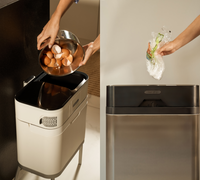
The Clear Drop Soft Plastic Compactor and Organics Collector anchor soft plastic and organics diversion from day one.

Explore Clear Drop Solutions →

Commercial recycling programs built around genuine waste diversion rates are increasingly what procurement teams, clients, and candidates scrutinize first. But where do you begin? The six steps below offer a clear, practical path from wherever your organization is today to a program that diverts waste, builds culture, and holds up to scrutiny.

Step 1: Launch With People, Not Just Policy

A ZeroTrash program that arrives as a memo or a new bin without context will underperform. The infrastructure matters, but so does the human activation layer around it.

This means communicating the why before the what. Employees who understand the scale of the problem — that only about 5% of plastics in the U.S. get recycled — engage with diversion programs differently than those who simply see a new bin appear in the break room.

Launch communication

Should come from leadership. A message from the CEO or HR Director that frames the program as part of the organization's values — not just an operational change — sets the right tone.

Employee education

Does not need to be elaborate. A short all-hands segment, a one-page visual guide at each station, and a brief FAQ covering what goes where and why covers the essentials.

Green team involvement

Accelerates adoption significantly. Identifying internal champions who can answer questions, model the behavior, and keep energy around the program alive turns a top-down initiative into a shared one.

Free Infographic Guide

6 Steps to ZeroTrash Adoption — download the full visual guide

Step 2: Audit — Understand What You're Actually Generating

Before you can divert waste, you need to know what you have. A waste audit doesn't need to be a complex or expensive exercise. Even a structured observation over one to two weeks — categorizing what fills your general waste bins — will reveal where your highest-volume streams are.

For most commercial and office environments, the dominant categories are:

  • Food and organic waste
  • Soft plastics (bags, wrap, pouches, packaging film)
  • Corrugated cardboard
  • General recyclables

The audit will tell you which of these represents your biggest landfill contribution and where diversion will have the most immediate impact.

What to look for

Volume by category, contamination patterns (recyclables mixed into general waste), and the locations generating the most waste — break rooms, mailrooms, loading docks, and cafeterias are typically the heaviest contributors.

Who should own it

Facilities or operations teams lead the audit, but HR and sustainability officers should be present to understand the employee behavior patterns that drive waste generation.

Step 3: Build the Right Infrastructure

The single biggest reason ZeroTrash programs fail isn't lack of commitment — it's lack of infrastructure. If sorting waste is confusing, inconvenient, or poorly supported, participation will be inconsistent no matter how well-intentioned your team is.

Infrastructure means three things:

  • Collection stations placed at the point of waste generation — not tucked in a corner. Break rooms, copy areas, and reception zones need clearly differentiated stations for landfill, recycling, soft plastics, and organics.
  • Labeling that uses images, not just words. A photo of a plastic bag on the soft plastics bin removes ambiguity far more effectively than text alone.
  • Specialist tools for difficult streams that standard bins cannot handle.
The right tools for the hardest streams

Soft plastics — one of the highest-volume and most overlooked waste categories in commercial recycling settings — cannot be handled by standard bins or curbside programs. The Clear Drop Soft Plastic Compactor (SPC) compresses film plastics into dense, shippable blocks that go directly to certified recyclers, making soft plastic diversion genuinely practical at the workplace level. For organics, the Clear Drop Organics Collector (OC) controls odors and slows microorganism growth — removing the friction that typically derails food waste programs in shared spaces.

Step 4: Partner Strategically for Downstream Certainty

A ZeroTrash program is only as credible as what happens to the materials after they leave your building. This is the step most organizations underinvest in — and it's where greenwashing most often happens, intentionally or not.

Diverting waste into a separate bin means nothing if that bin ends up co-mingled with general waste at the hauler level. Before launching any program, confirm that your waste management partners have verified downstream pathways for each material stream you're diverting.

For soft plastics

This is particularly critical. Most waste haulers do not have processing capability for film plastics. An end-to-end solution like the SPC — which includes prepaid shipping to certified U.S. recycling facilities — removes this uncertainty entirely. You know where it goes because the pathway is built into the program.

For organics

Confirm that your composting or anaerobic digestion partner accepts commercial volumes from your facility type and that there are no contamination restrictions that would disqualify your stream.

Document everything

Recycling certificates, diversion data, and processor confirmations are the evidence base your sustainability reporting — and your client conversations — will rely on.

Step 5: Measure, Report, and Keep Improving

What gets measured gets sustained. From the first week of your program, track diversion rates by stream, volume of materials kept out of landfill, and participation patterns across your facility.

This data serves three purposes:

  • Internally: it gives leadership and HR a clear picture of program performance and highlights where additional education or infrastructure is needed.
  • Externally: it feeds your ESG reporting, satisfies procurement questionnaires from clients, and gives your recruiting team something concrete to cite.
  • Strategically: it becomes a living record of your organization's commitment to commercial recycling and waste diversion — one that compounds in credibility over time.

Real-World Impact: What Measurable Programs Look Like

The table below maps program types to the credentials they generate and the business outcomes they support:

Program Type What It Demonstrates Measurable Outcome
Soft plastic diversion (SPC) End-to-end recycling accountability Volume of film plastic diverted; certificates of recycling
Organic waste separation (OC) Operational discipline, reduced landfill burden Diversion rate %; CO2e avoided estimate
Zero-waste-to-landfill initiative Systematic commitment, not just intention Landfill diversion rate across all streams
ESG / sustainability reporting Transparency and governance readiness Third-party verified metrics in annual report
Employee green team program Culture alignment, internal advocacy Participation rate; employee survey scores
Set progressive targets

Starting with 50% soft plastic diversion, then building toward 80% and beyond, creates momentum and a continuing story to tell. Celebrate milestones — share them internally and in your sustainability report.

Step 6: Evolve Toward Zero

ZeroTrash is a trajectory, not a switch. Organizations that treat it as a continuous improvement program — reducing landfill waste quarter over quarter — build more durable programs and more authentic sustainability narratives than those chasing a one-time certification.

What Clients Look For: Credentials That Map to Business Value

As commercial recycling and environmental sustainability initiatives become standard procurement criteria, the credentials your program generates become directly relevant to winning and retaining business.

Credential Why Clients Care Business Signal
Certified recycling pathway (soft plastics) Confirms material does not end up in landfill Supply chain integrity, reduced Scope 3 risk
Organic waste diversion data Demonstrates operational follow-through ESG reporting readiness
Commercial waste management services Shows scale and systematisation Procurement confidence
Third-party recycling certificates Independent verification of claims Audit-ready sustainability narrative
Employee participation metrics Signals cultural alignment, not just infrastructure Employer brand and talent pipeline

The Compounding Effect

Each of these six steps reinforces the others. A solid audit informs better infrastructure. Better infrastructure enables stronger partnerships. Strong partnerships produce credible data. Credible data fuels meaningful communication. And ongoing measurement creates the feedback loop that keeps all of it improving.

That compounding effect is what separates a genuine ZeroTrash program from a one-time initiative. It's also what makes it visible — to employees, to candidates, to clients, and to the communities where your organization operates.

The journey to zero starts with knowing where you are. Step one is closer than you think.

Download the Full Guide

6 Steps to ZeroTrash Adoption — a visual infographic guide for your team

Start your ZeroTrash program today

Explore how Clear Drop's Soft Plastic Compactor and Organics Collector can anchor your diversion program from day one.

Explore Clear Drop Solutions →


Latest posts All posts

Can You Compost Cooked Food? What Goes In (And What Doesn't)

Can You Compost Cooked Food? What Goes In (And What Doesn't)

  You're already full but looking down at a half-eaten plate. You pause. The compost bin is ri...
6 Steps to Launching a ZeroTrash Program at Your Organization

6 Steps to Launching a ZeroTrash Program at Your Organization

Sustainability intentions are easy. Operational sustainability is harder — and far more val...
The Real Difference Between Composting and Organic Waste Collection

The Real Difference Between Composting and Organic Waste Collection

Most people trying to manage food waste hit the same wall. Backyard composting requires outdoor...
Organic Waste Laws by State: What's Already Required and What's Coming

Organic Waste Laws by State: What's Already Required and What's Coming

Most conversations about composting start with legitimate questions: Why does it matter? What d...
How To Talk to Your Roommates (or Partner) About Waste Sorting

How To Talk to Your Roommates (or Partner) About Waste Sorting

You've already done the hard work: figured out how to sort your food scraps, learned that soft ...
Food Scraps in the Landfill: What's Actually Happening Underground

Food Scraps in the Landfill: What's Actually Happening Underground

Most food scraps end up in landfills, where they produce methane — a greenhouse gas far more po...
Atlantic Health Demonstrates Diversion of One Ton of Plastic Waste Annually with SPC

Atlantic Health Demonstrates Diversion of One Ton of Plastic Waste Annually with SPC

Single-use plastic waste is one of the most persistent challenges facing healthcare facilities ...
Earth Day 2026: 5 Waste Habits That Make a Real Difference at Home

Earth Day 2026: 5 Waste Habits That Make a Real Difference at Home

🌍 Earth Day 2026 5 Small Habits That Actually Reduce Household Wast...
The Organics Collector as a Community Tool: Why Early Adopters Are Leading the Change

The Organics Collector as a Community Tool: Why Early Adopters Are Leading the Change

Most people assume that waste habits are shaped by systems — city programs, building rules, mun...
How Sustainable Practices Help Attract and Retain Business Customers

How Sustainable Practices Help Attract and Retain Business Customers

"Our clients' clients are holding them accountable for sustainability, and that pressure trave...
Why Your Kitchen Compost Bin Still Smells and What Actually Fixes It

Why Your Kitchen Compost Bin Still Smells and What Actually Fixes It

"I tried bins with filters before. They still had fruit flies and odor — I was already thinkin...
What is an Organics Collector? (And Why It’s Not a Composter)

What is an Organics Collector? (And Why It’s Not a Composter)

What Is an Organics Collector? (And Why It's Not a Composter) A quick search for a "composter a...
Global Recycling Day: The Reality of  Recycling and How You Can Help Improve the Stats

Global Recycling Day: The Reality of Recycling and How You Can Help Improve the Stats

March 18 is Global Recycling Day, an international initiative created by the Global Recycling F...
Soft Plastic Recycling Myths That Stop People from Taking Action

Soft Plastic Recycling Myths That Stop People from Taking Action

Soft plastic recycling myths that stop people from taking action Soft plastic recycling can be ...
How ZeroTrash Initiatives Improve Workplace Culture and Attract Eco-Conscious Talent

How ZeroTrash Initiatives Improve Workplace Culture and Attract Eco-Conscious Talent

Plus, A 6-Step Approach to Implementing ZeroTrash Adoption Sustainability is no longer a side ini...
Mandatory Organic Waste Separation in New York: How To Comply Without Odors, Messes, or Fines

Mandatory Organic Waste Separation in New York: How To Comply Without Odors, Messes, or Fines

Over the past couple of years, New York City has steadily changed how residential waste is ...
UCSF Health's Mission Bay Hospital Achieves Guaranteed Recycling of Pharmacy Soft Plastic Waste with Clear Drop SPC

UCSF Health's Mission Bay Hospital Achieves Guaranteed Recycling of Pharmacy Soft Plastic Waste with Clear Drop SPC

Healthcare facilities generate massive amounts of plastic waste daily, and California's ambitiou...
How To Compost Eggshells and Vegetable Scraps the Right Way: Faster, Nutrient-Rich Composting & Zero-Waste Kitchen Tips

How To Compost Eggshells and Vegetable Scraps the Right Way: Faster, Nutrient-Rich Composting & Zero-Waste Kitchen Tips

In many homes, food scraps make up around 25% to 30% of household waste. When sent to landfills, ...
Soft Plastic Compactor vs. Curbside Recycling: The Real Difference

Soft Plastic Compactor vs. Curbside Recycling: The Real Difference

Most people assume recycling works when something goes into the blue bin. But for soft...
How Your Household Can Save Up to $240 a Year on Trash Costs

How Your Household Can Save Up to $240 a Year on Trash Costs

Household trash bills are rarely questioned. Most people accept them as a fixed cost, just like...
How ZeroTrash® AI Helps You Identify Soft Plastics Correctly

How ZeroTrash® AI Helps You Identify Soft Plastics Correctly

ZeroTrash® AI is designed to take the guesswork out of everyday waste decisions. Using a camer...
Why CES 2026 Shifted the Conversation Around Household Waste

Why CES 2026 Shifted the Conversation Around Household Waste

CES has always been a place for bold ideas and ambitious visions. But this year, we noticed a sub...
How to Compost in an Apartment (Without Annoying Your Neighbors or Your Landlord)

How to Compost in an Apartment (Without Annoying Your Neighbors or Your Landlord)

Many people still believe composting requires a yard. In reality, modern indoor composting work...
Post-Holiday Waste Reset: Starting 2026 With a Clean, ZeroTrash® Kitchen

Post-Holiday Waste Reset: Starting 2026 With a Clean, ZeroTrash® Kitchen

The holidays may bring plenty of celebration — but they can also leave a big mess, between a clut...
From Trash to Treasure: Real Products Made From Recycled Soft Plastics (and How Clear Drop Makes It Happen)

From Trash to Treasure: Real Products Made From Recycled Soft Plastics (and How Clear Drop Makes It Happen)

Fun fact: Soft plastics aren’t “unrecyclable.” They’ve just been collected the wrong way for over...
Holiday Composting Guide 2025: How to Reduce Waste at Christmas & New Year Events

Holiday Composting Guide 2025: How to Reduce Waste at Christmas & New Year Events

The holidays bring plenty of food, cheer, and …. waste? With all those extra food scraps, packagi...
How Much Food Americans Waste and What You Can Do

How Much Food Americans Waste and What You Can Do

Key Takeaways Americans waste 30%-40% of their total food supply each year ...
How the Shaw Institute Successfully Started to Recycle Laboratory Soft Plastic Waste for the First Time with SPC

How the Shaw Institute Successfully Started to Recycle Laboratory Soft Plastic Waste for the First Time with SPC

The Shaw Institute in Blue Hill, Maine, is a respected nonprofit research organization studying t...
10 Soft Plastics You Didn’t Know You Could Recycle at Home

10 Soft Plastics You Didn’t Know You Could Recycle at Home

Key Takeaways Only 1% of U.S. households have access to curbside film recyc...
How Clear Drop’s Soft Plastic Compactor (SPC) Recycling System Works | Clear Drop

How Clear Drop’s Soft Plastic Compactor (SPC) Recycling System Works | Clear Drop

At Clear Drop, we're redefining what responsible soft plastic recycling looks like. Our Sof...
How Geekdom sparked early wins in soft plastic recovery with the Clear Drop's SPC

How Geekdom sparked early wins in soft plastic recovery with the Clear Drop's SPC

Geekdom is a cornerstone of San Antonio’s startup and innovation ecosystem. Spread across four fl...
How Trinity University advanced soft plastic recycling with the SPC

How Trinity University advanced soft plastic recycling with the SPC

Flexible plastic waste is one of the most persistent challenges on college campuses. From snack w...
From soft plastic to microplastic: what to know

From soft plastic to microplastic: what to know

Soft plastic packaging surrounds almost every product we buy — bags, wrappers, film, shippi...
Survey reveals trash sparks more fights than childcare, and why recycling Is at the heart of It

Survey reveals trash sparks more fights than childcare, and why recycling Is at the heart of It

Trash duties are the most underestimated part of modern household life—yet they’re one of the big...
How one office building pilot became a model for smarter soft plastic waste reduction

How one office building pilot became a model for smarter soft plastic waste reduction

Commercial buildings generate a large share of soft plastic waste — from deliveries, shipments, ...
Official rules: Clear Drop OC pre-order giveaway

Official rules: Clear Drop OC pre-order giveaway

The drawing was heldWINNER SELECTION VIDEO1. SPONSOR The Clear Drop Pre-Order Giveaway (the “Give...
Fixing the broken recycling system: why Clear Drop® exists

Fixing the broken recycling system: why Clear Drop® exists

The global recycling system is struggling to keep up with the waste we generate. Most soft pla...
Getting started with soft plastic waste collection at home

Getting started with soft plastic waste collection at home

Flexible packaging makes everyday life easier, but most soft plastics still end up in landf...
How Eduardo's Bridal & Tuxedo reduced soft plastic waste volume by 90% with the SPC

How Eduardo's Bridal & Tuxedo reduced soft plastic waste volume by 90% with the SPC

Garment retail businesses rely heavily on flexible plastic packaging to protect inventory. But on...
Clear Drop: how we’re revolutionizing home waste management

Clear Drop: how we’re revolutionizing home waste management

Most household waste still ends up in landfills, not because people do not want to recycle, but b...
Why business recycling matters: a key to corporate sustainability

Why business recycling matters: a key to corporate sustainability

Corporate sustainability is now a critical business priority. Both employees and customers ...
Tackling plastic in the healthcare industry: challenges and solutions

Tackling plastic in the healthcare industry: challenges and solutions

U.S. healthcare produces more than 5 million tons of waste every year, and plastics account for...
Composting: electric vs. professional or traditional options

Composting: electric vs. professional or traditional options

In the United States, food scraps make up a significant share of household waste — yet only...
Soft plastic recycling: key challenges and solutions

Soft plastic recycling: key challenges and solutions

Soft plastics like grocery bags, bubble wrap, and packaging film make up a growing share of...
All posts

FAQs

Soft plastics can be recycled, but curbside programs don't accept them. Clean, dry film plastic needs to go to a dedicated drop-off location at a participating grocery or retail store. Use the How2Recycle store locator or Earth911 to find a drop-off point near you.

It cannot be recycled curbside and causes jams in sorting equipment, which reduces overall recycling efficiency. It requires separate collection and a dedicated solution like a compactor.

Yes. Companies can collect soft plastics separately, keep them clean and dry, and use compacting solutions to make storage and transportation more efficient.

It reduces waste volume, prevents contamination, and helps companies increase landfill diversion rates while improving ESG performance.

The SPC accepts HDPE (#2), LDPE (#4), and PP (#5) — food wrappers, shopping bags, bubble wrap, cling wrap, zip-lock and freezer bags. If it crumples easily in your hand, it's likely compatible.