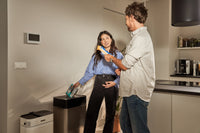
Many people still believe composting requires a yard. In reality, modern indoor composting works even in a 400 sq ft studio — clean, fast, and odor-free when managed correctly.
Start with clean collection — before composting begins
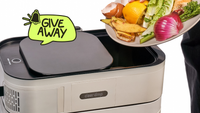
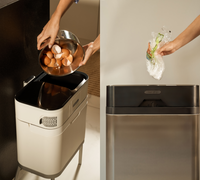
The Clear Drop Organics Collector keeps food waste odor-free and organized from the first moment — built for apartments and compact kitchens.
See the Organics Collector →of U.S. household waste is organic and could be composted instead of decomposing in landfills
is enough space for effective indoor composting — no yard, no outdoor bins required
is all it takes with an electric composter to turn food scraps into usable output
proven indoor composting methods that actually work for apartment renters in 2025
Source: U.S. EPA — Composting at Home
Below are the three indoor composting methods urban renters actually use in 2025, and how to choose the one that fits your space, routine, and maintenance tolerance.
The 3 Real Ways to Compost Indoors in 2025
| Method | How it works | Time to output | Smell level | Space needed | Best for |
|---|---|---|---|---|---|
| Vermicomposting | Red worms break down food scraps biologically | 2–4 months | Very low (if balanced) | Small bin under sink | Hands-on, low-tech users |
| Electric Composter | Heat + grinding accelerate decomposition | 24–48 hours | Odorless with carbon filter | Countertop appliance | Fast, low-effort composting |
| Bokashi | Anaerobic fermentation using inoculated bran | ~2 weeks + curing | Mild pickle smell when opened | 5-gallon bucket footprint | All-food composting without worms |
References: Cornell University Vermicomposting · Oregon State Extension Bokashi Guide · Electric composting research (ScienceDirect)
Pros and Cons (Real-World Usability)
| Method | Advantages | Limitations | Typical cost |
|---|---|---|---|
| Vermicomposting | Low cost, rich worm castings, no electricity | Slower process, requires worm care | $40–150 |
| Electric Composter | Fastest option, low odor, handles cooked food | Higher upfront price, uses electricity | $299–549 |
| Bokashi | Accepts meat, dairy, citrus; compact footprint | Requires soil or finishing bin | $60–120 |
Every method works. The best system is the one you will actually maintain.
What Works Best in Small Apartments (2024–2025 User Reports)
Best for beginners: Electric Composter
- Almost no maintenance
- Reduces waste volume by ~70–90%
- No fruit flies or odor with carbon filtration
- Fits easily in compact kitchens
Best budget option with high-quality soil: Worm Bin
- Very low operating cost
- Produces castings and compost tea for plants
Best for full-diet waste (meat & dairy): Bokashi
- Handles all food types
- Compact and pest-resistant
- Requires a finishing step in soil

Small-Space Composting Tips
- Freeze food scraps to eliminate odor and pests
- Add cardboard, coco coir, or biochar for moisture balance
- Use a 2–4 liter freezer bin for daily convenience
- Balcony planters work well for finishing Bokashi
- Electric composters are the cleanest entry point
Composting handles food scraps, but what about the food waste collected before it reaches your bin? The Clear Drop Organics Collector (OC) is designed for exactly that: odor-free, structured collection of organic waste at home — so nothing ends up in the trash by default. It's the missing first step before composting kicks in.
Composting by State: Local Programs for Apartment Renters
Indoor composting methods work anywhere. But depending on where you live, you may also have access to a municipal drop-off or curbside organics program. Here is what renters can use in the most active states.
California
California has mandatory organics collection under SB 1383. Since January 2022, all residents — including apartment renters — are required by law to separate food scraps from trash. Building management must provide organics collection service. If your building does not have a green bin program, you can file an anonymous complaint via CalRecycle.
California is the most advanced state for apartment composting. Green bins accept all food scraps, food-soiled paper, and yard trimmings. If your landlord has not set up a program, they are out of compliance and you have legal recourse.
- What's accepted: All food scraps including meat, dairy, and bones; food-soiled paper; yard trimmings
- Who's responsible: Your property manager is legally required to provide containers and tenant education
- No program in your building: Self-hauling to a local composting facility is also allowed under the law
- Find your local program: CalRecycle Organics Collection
New York City
Curbside composting became mandatory citywide in October 2024 under Local Law 85 of 2023. All NYC residential buildings must participate, and DSNY collects organics weekly on each building's recycling day. Enforcement with fines is active for larger buildings.
Buildings with 4 or more units must provide a designated storage area with labeled compost bins. Fines go to building owners, not tenants. Pickup accepts everything including meat, bones, dairy, and food-soiled paper. Smart Composting Bin drop-off kiosks are also available across all five boroughs.
- What's accepted: All food scraps, food-soiled paper, leaf and yard waste
- Pickup day: Same as your recycling day, every week
- Drop-off option: Smart Composting Bins are located throughout the city — find the nearest one at nyc.gov/dsny
- No bin in your building: Buildings with 4 or more units are legally required to provide one — contact your landlord or file a complaint with 311
New Jersey
New Jersey does not have a statewide composting mandate, but several cities and counties run active drop-off and pickup programs, particularly in the northern part of the state. Coverage from private services is strong across Bergen, Morris, Essex, Union, and Hudson counties.
Hoboken offers free drop-off at 4 locations after a short online registration. Jersey City runs a municipal drop-off program citywide. Princeton expanded to 10 drop-off stations. Private curbside pickup services cover most of the state for residents who want a door-side option.
- Hoboken: Free drop-off at 4 city sites after online registration — hobokennj.gov/resources/compost
- Jersey City: Municipal drop-off program — jerseycitynj.gov
- Bergen County: Neighborhood Compost — curbside pickup for apartments — neighborhoodcompost.com
- Morris, Essex, Union counties: Java's Compost — drop-off network and curbside pickup — javascompost.com
Florida
Florida has no statewide composting law, but a growing network of private services and city programs covers renters across the state. Orlando runs city-managed drop-off stations and offers free compost bins for residents. O-Town Compost expanded in 2025 to serve Orlando, Tampa, St. Petersburg, Gainesville, and surrounding areas.
The most practical option for most Florida apartment renters is a private pickup subscription or a community drop-off point. In areas without local service, indoor composting with a worm bin or bokashi bucket is the most reliable approach.
- Orlando: City-run drop-off locations plus free backyard compost bins for residents — check orlando.gov for current sites
- Central FL, Tampa, St. Pete: O-Town Compost — residential and multi-family pickup — o-towncompost.com
- Southwest FL: Naples Compost — residential curbside pickup in the Naples and Fort Myers area
- No service nearby: A worm bin or bokashi system is the most practical indoor option in areas without local programs
Georgia
Georgia has no statewide mandate, but Atlanta has an active drop-off program through CompostNow funded by a USDA grant, and Athens-Clarke County runs a well-established food scraps program with five 24/7 drop-off locations. Private curbside pickup is available across metro Atlanta.
Atlanta renters can sign up for the free city drop-off program through CompostNow and receive drop-off location details by email. The Athens program accepts food scraps around the clock at multiple sites including UGA campus locations.
- Atlanta: Free CompostNow drop-off program (USDA-funded, city partnership) — compostnow.org/atlanta
- Athens: 24/7 food scraps drop-off at 5 sites including CHaRM and UGA campuses — accgov.com
- Metro Atlanta curbside: CompostNow residential pickup service — compostnow.org
- Other Georgia counties: The University of Georgia Extension offers composting resources and Master Composter classes statewide
Keep organic waste out of your trash — before it reaches the compost bin
The Clear Drop Organics Collector makes daily food waste separation clean, odor-free, and effortless — designed for apartments and compact kitchens.
See the Organics Collector →